
At Barlinek, we manage our production processes with a commitment to preserving forest resources. We make full use of the timber we source, reduce energy consumption at our production facilities, and implement our own tree-planting program.
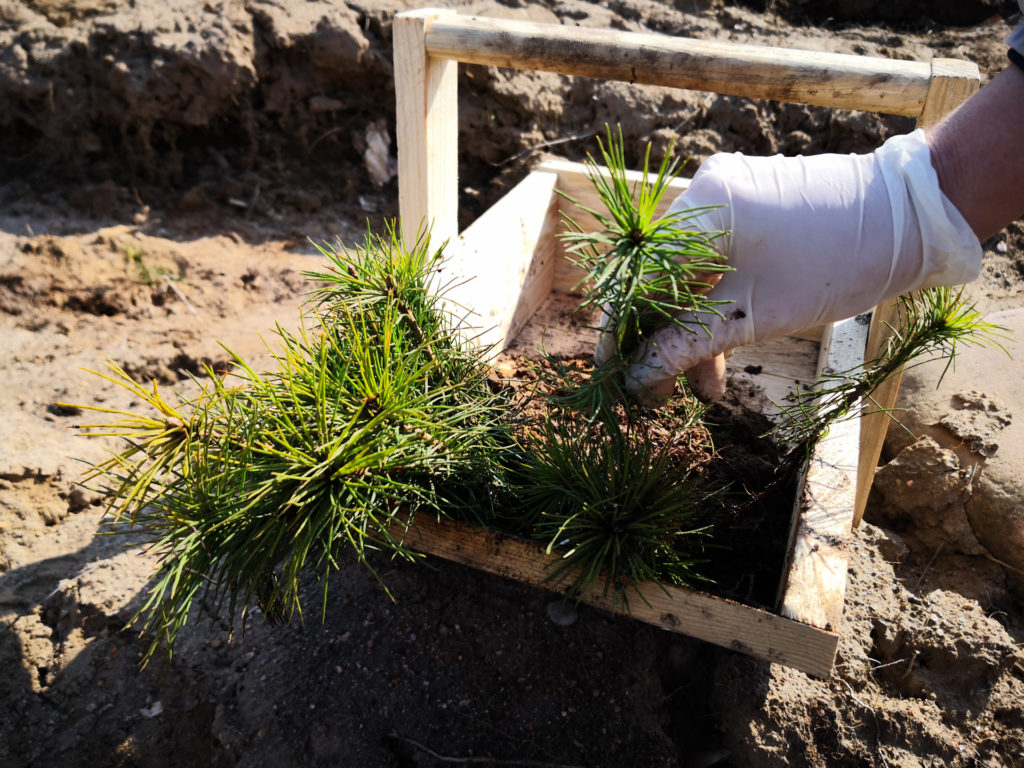
Over 18 million trees are already growing in Barlinek’s Customer Forest!
The “1-for-1” principle is a program we have been running since 2000; for every package of Barlinek Floorboards sold that bears the campaign symbol, we co-finance the purchase of one tree seedling. Thanks to this initiative, we—together with our customers—have “planted” over 18 million trees in Poland, and we are also expanding the program into Romania and Ukraine.
The program aims to actively participate in the renewal of forest resources and to support the sustainable management of the wood used to manufacture products such as flooring, skirting boards, and pellets.
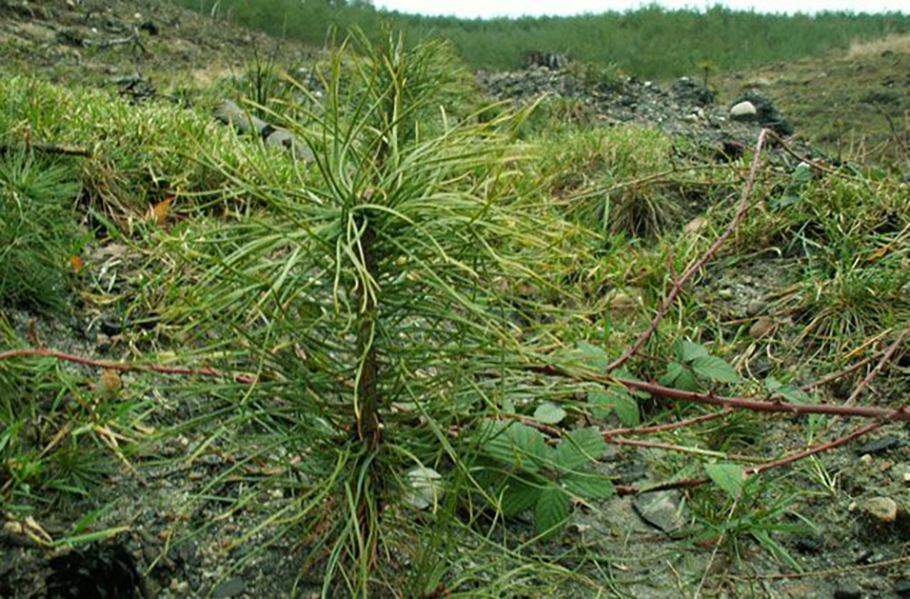
The first tree was planted in the Bogdaniec Forest District (Lubusz Province) in 2000. Since then, the Barlinek Customers’ Forest has steadily grown. In 2016 alone, nearly 1.5 million trees were planted in Poland, and the number continues to rise each year.
In Poland, the “1 for 1” program covers forest districts across four provinces: Lubusz, West Pomerania, Pomerania, and Greater Poland. Currently, planting operations are taking place in the Sulęcin Forest District (Lubusz Province).
The initiative is carried out in Poland, Ukraine (since 2007), and Romania (since 2015). The Barlinek Customers’ Forest is already home to over 18 million trees and continues to expand year by year.
Barlinek also takes care of the famous BartuekOak, allocating funds for necessary renovation works to save this most famous Polish natural monument.
The legendary oak known as “Bartek” grows in Zagnańsk in the Świętokrzyskie Voivodeship. It is the most famous tree in Poland. Already in the interwar period, by the verdict of a special competition court, it was recognized as the most magnificent and valuable monument of Polish nature. According to legend, the tree is over 1200 years old, although scientists most often estimate its age at about 700 – 1000 years. Despite such a long life and many experiences, the oak continues to grow and bear fruit – every year a large number of acorns appear in its vast branches.
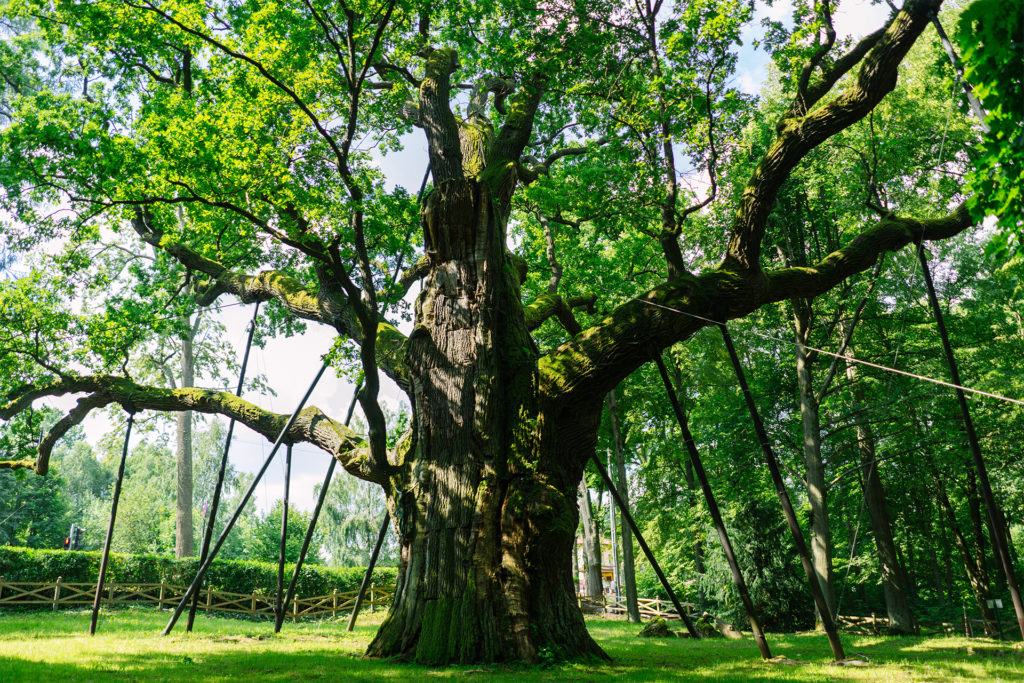
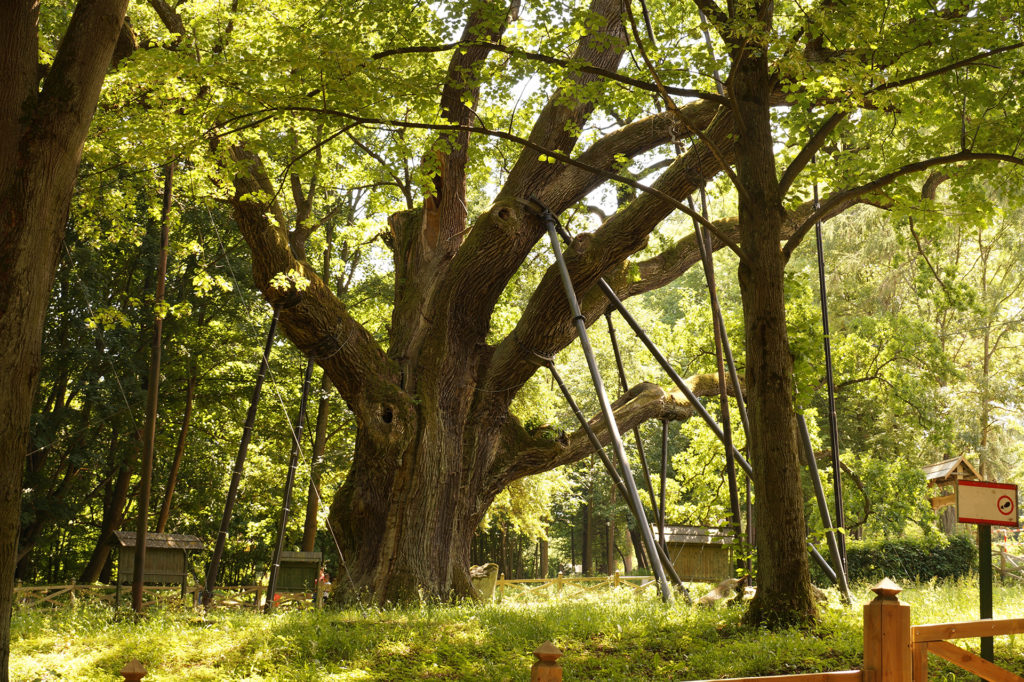
The tree is shrouded in many legends. One of them says that Bolesław Krzywousty himself rested under “Bartek”. According to another, Jan III Sobieski, returning from the Vienna expedition, hid a bottle of wine, a saber, and a Turkish musket in its hollow.
In 1906, the tree was damaged by a fire in nearby buildings. In the 1920s, decayed fragments of the tree’s interior were secured with concrete fillings. In 1963, part of the rotting trunks was filled, and diseased branches threatening tourists visiting “Bartek” were removed.
In 1991, a lightning strike damaged one of the branches and caused part of the trunk to catch fire. Despite many dramatic events in which “Bartek” was the protagonist, the ancient oak remains a living and astonishing testament to the power of nature. Since 1952, the tree, as a natural monument, has been under strict legal protection.
The beautiful avenue nearby, stretching for 200 meters and composed of about 50 magnificent trees: 100-200-year-old maples, lindens, ashes, black locusts, and larches, is also subject to the same protection.
According to official data, “Bartek” has the following dimensions:
diameter at 130 cm height (DBH) – 314 cm,
circumference at breast height – 985 cm,
circumference at ground level – 1340 cm,
height – 30 m,
crown diameter – approx. 40 m,
volume – over 70 m3.
The king of Polish trees requires conservation, care, and general maintenance. Barlinek’s help contributes to preserving this historic oak for future generations.
Barlinek also co-finances a program to restore the tree-nesting peregrine falcon population, led by the “Sokół” (Falcon) Association for Wild Animals. Thanks to these efforts, several hundred of these endangered birds have been successfully reintroduced to Polish forests in recent years. In 2020 alone, the Association reintroduced—and thus set free—108 young peregrine falcons sourced from breeding programs in Poland, the Czech Republic, Slovakia, and Germany.
New peregrine falcon nesting sites have been established in locations including Barlinek (within the Barlinek Forest), as well as in Żmigród, Chojna, Cybinka, Torzym, and Wałcz.
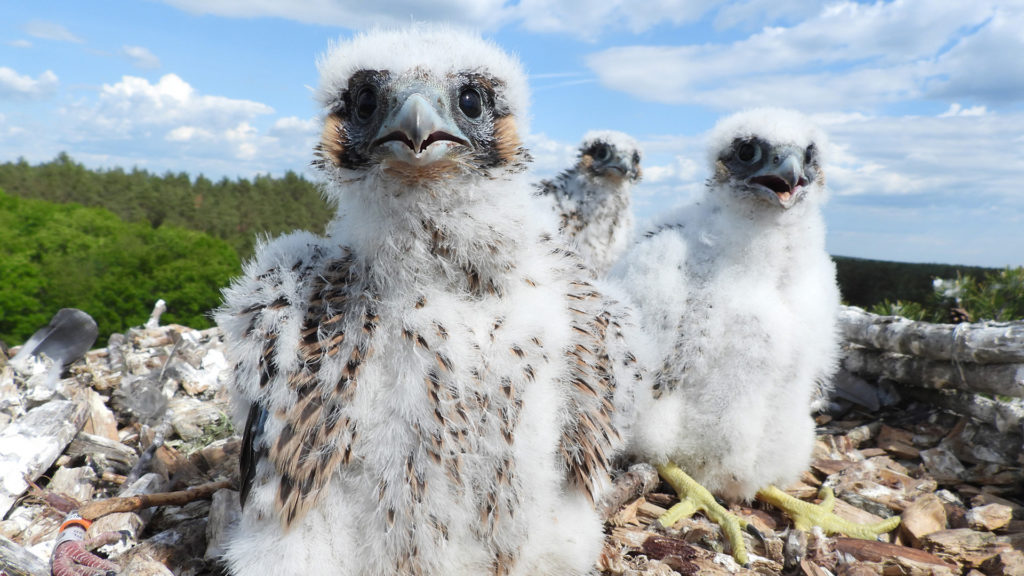
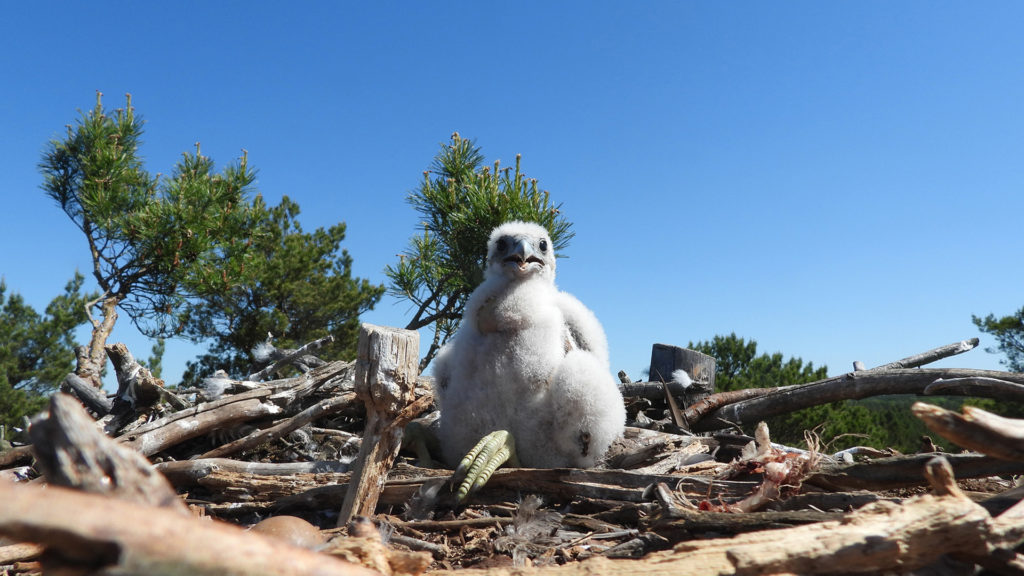
The process leading to the near-total extinction of the peregrine falcon in Poland and across Europe began in the 1960s. The population collapse was driven by the widespread use of plant protection products at the time, which accumulated in the birds’ bodies. These toxins disrupted the falcons’ calcium metabolism, weakening their eggshells and causing the females to crush them during incubation. Faced with this catastrophic population decline, intensive efforts were launched to breed peregrine falcons and subsequently develop methods for their reintroduction.
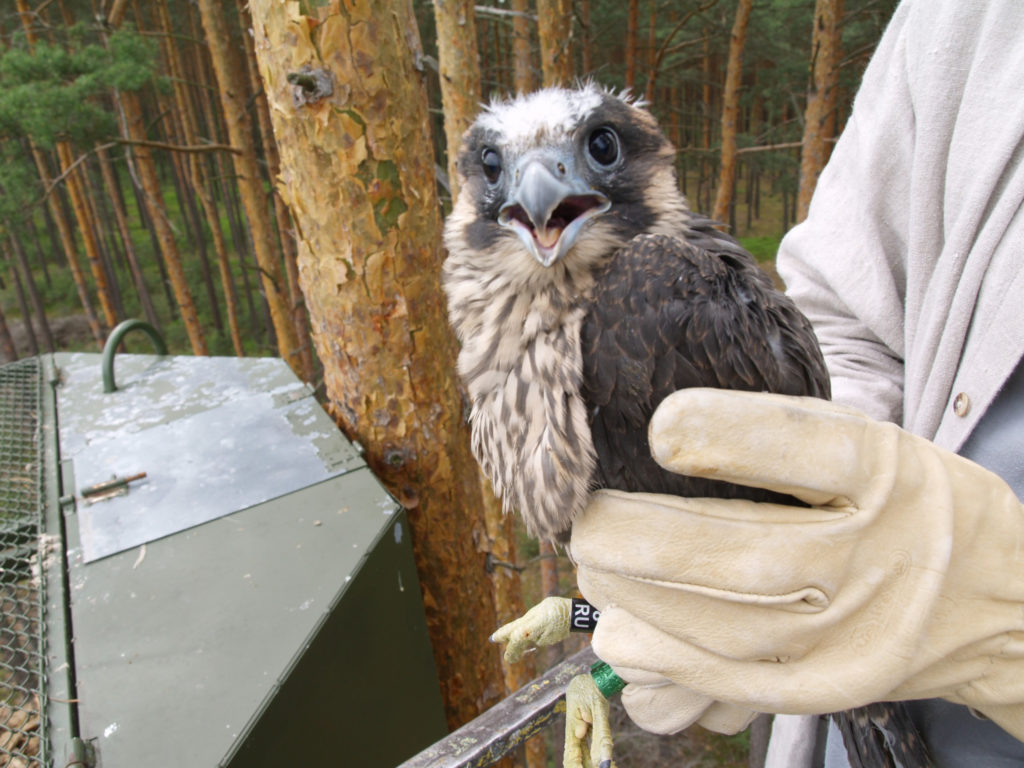
Restoring this endangered bird of prey to the wild is part of a reintroduction program aimed at rebuilding the species’ population. Caretakers ensure the young birds are raised in conditions that closely mimic their natural environment. The next stage involves placing special baskets containing the young birds in trees deep within the Barlinek Forests. The birds remain confined for a little over a week before their caretakers open the enclosures. Initially, the young falcons are tentative in their natural surroundings; some remain in the baskets for a while longer, while others fly only in the immediate vicinity of the release site, not yet venturing further afield. The young birds are fed and monitored until they become fully independent, which usually takes about three weeks. All birds are banded to facilitate future monitoring.
The project is a collaborative effort between Barlinek S.A., the Barlinek Forest District, and the “Sokół” Association for Wild Animals. For more information on the falcons, visit www.peregrinus.pl (the “Sokół” Association for Wild Animals).
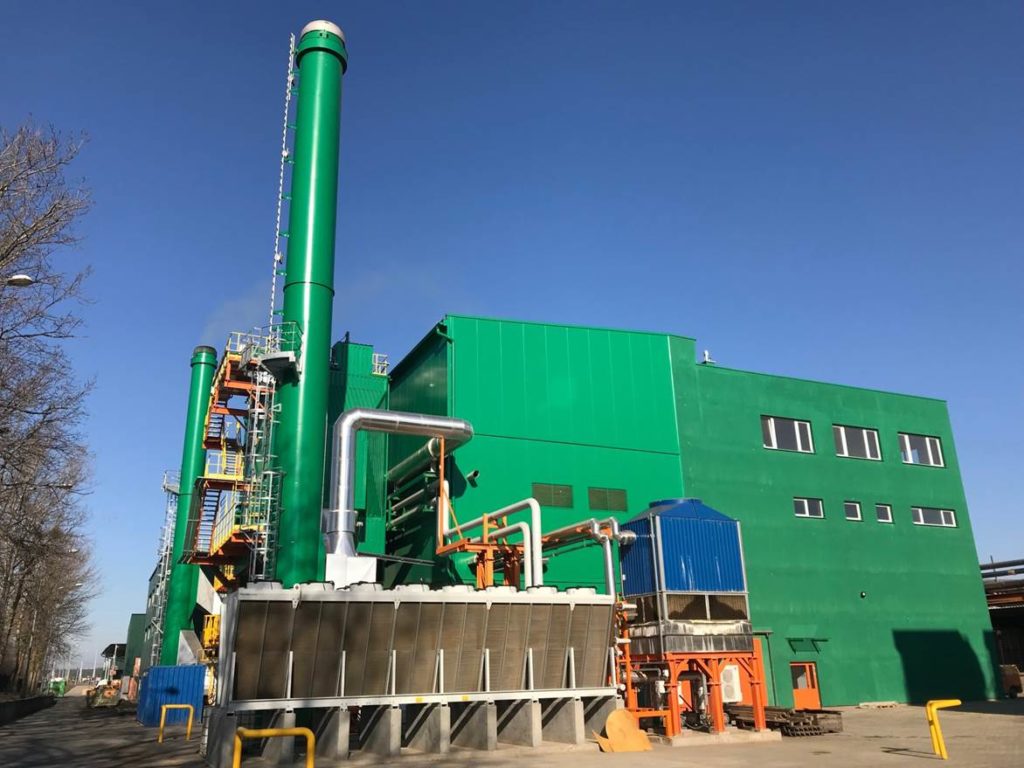
In October 2018, Barlinek launched a Trigeneration unit at its factory in Barlinek. The unit includes a biomass boiler fueled by wood chips (waste from engineered wood flooring production), with a capacity of 25 MWt, and a back-pressure steam turbine coupled with a 5.5 MW generator.
Thermal energy is entirely produced for the plant’s needs, and electricity production allows us to cover approximately 60% of the plant’s electricity demand. The launch of Trigeneration at the Barlinek factory resulted in a reduction of greenhouse gas emissions, expressed in Mg (tons) of CO2e (carbon dioxide equivalent), by over 70%.
Currently, we cover, on average, about 60% of the Barlinek factory’s electricity demand and 100% of its thermal energy demand for production processes from our own production.
Read more about trigeneration:
The Fabryki Marzeń Foundation helps people in difficult financial situations who have lost their life’s work due to unforeseen events, by renovating and fully furnishing their homes. We are happy to help together with the Foundation by donating engineered wood flooring.

Ecology is not the only area in which Barlinek is socially involved. For years, we have been caring for those in need, especially children, by providing them with financial and material assistance.
This assistance also includes the free transfer of our flooring to public benefit centers and institutions.
We have supported, with our products, among others, the Bullerbyn Foundation, Special School Complex No. 31 in Bydgoszcz, the Serce Dzieciom Foundation, and the Psychooncology Center.