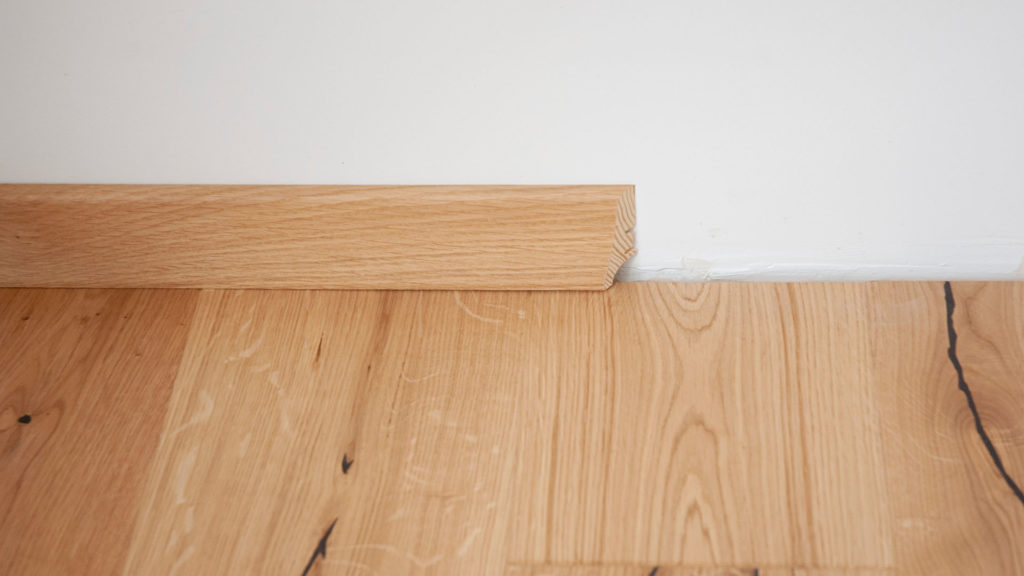
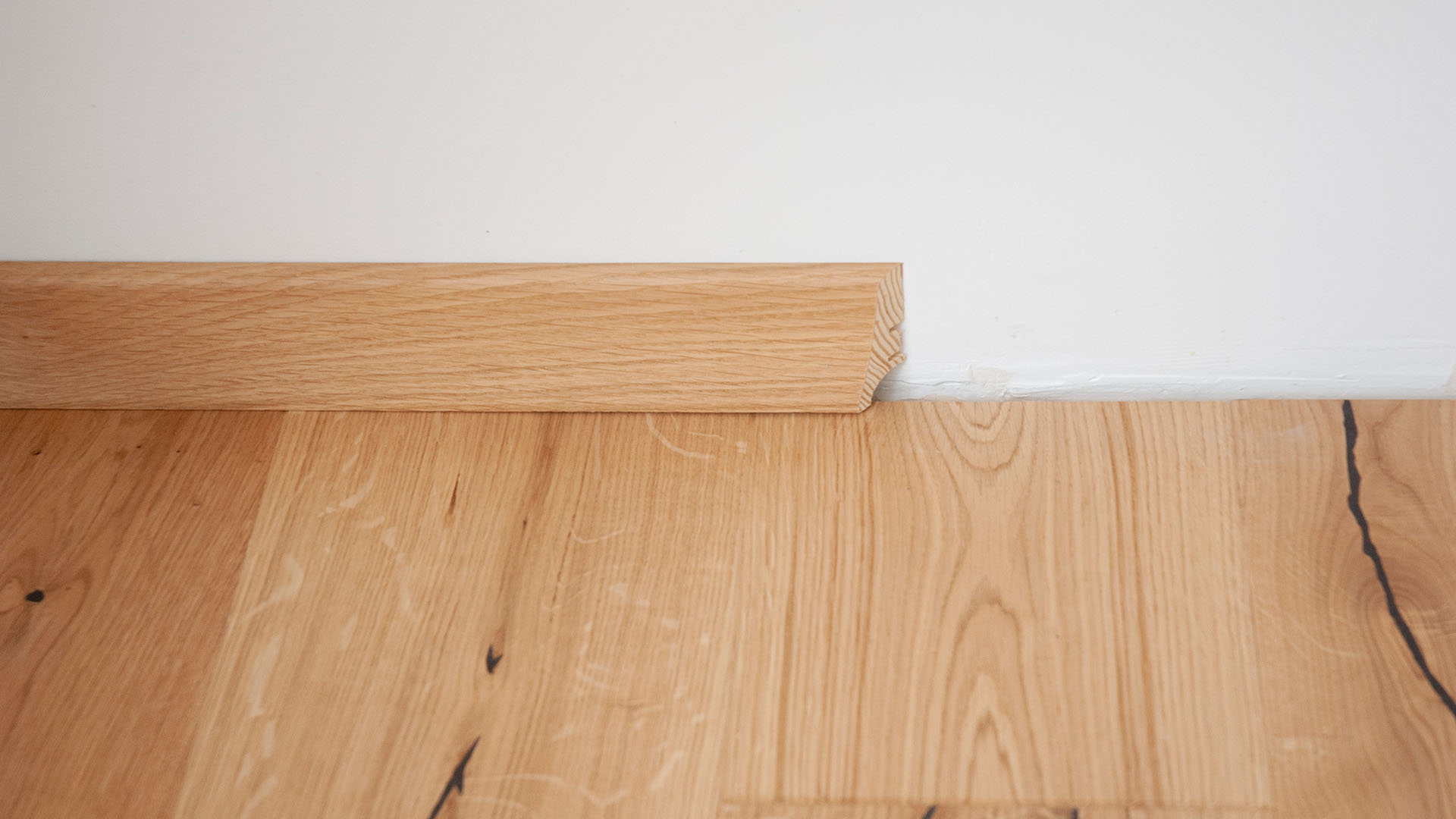
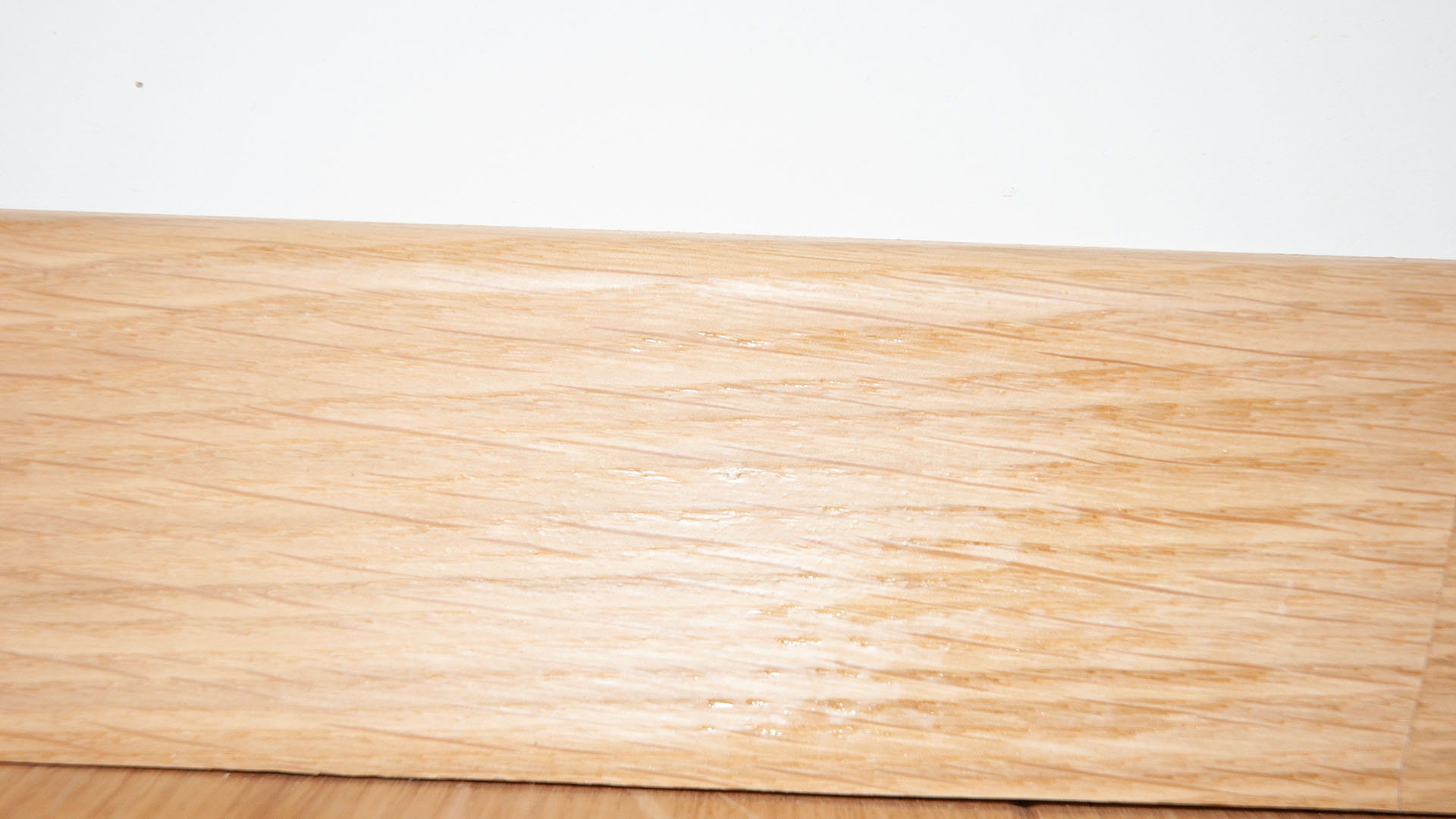
Wooden skirting boards are the best finish for a wooden floor, panels or tiles. They are extremely functional and dimensionally stable. Barlinek product range includes skirting boards in many patterns and colours – including covered with natural veneer, painted white or foiled. Skirting boards are available in a very wide range of profiles and heights, thanks to which it is easy to use them to finish interiors in various styles. It is also worth noting that wooden skirting boards are very easy to install.
contents
Skirting board - installation
The installation of wooden baseboards is simple. Baseboards are an essential element of any interior. They add character to the decor, conceal gaps between the floor and the wall, and make the room feel cozier. Additionally, they are highly practical, as they can easily cover unsightly cables.
The wooden baseboards from Barlinek are covered with a natural veneer, which means there may be variations in color and grain. To avoid the combination of contrasting baseboards, they should be unpacked and arranged from the lightest to the darkest. This is the order in which they should be installed on the walls.
Skirting boards – Installation with Adhesive
1. The wooden baseboards from Barlinek are covered with a natural veneer, which means there may be variations in color and grain pattern. To avoid the combination of contrasting baseboards, they should first be unpacked and arranged from the lightest to the darkest. This is the order in which they should be installed on the walls.
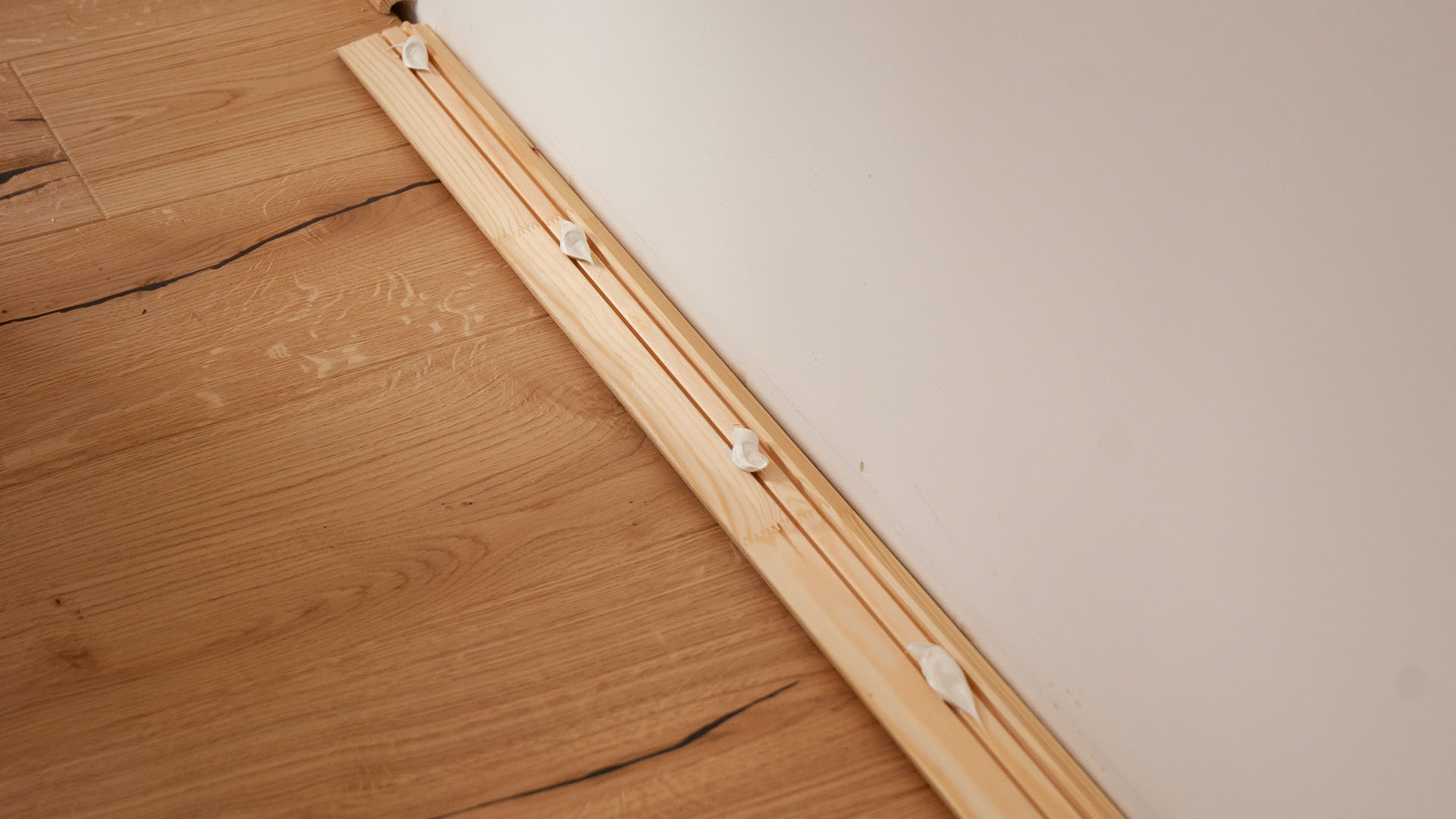
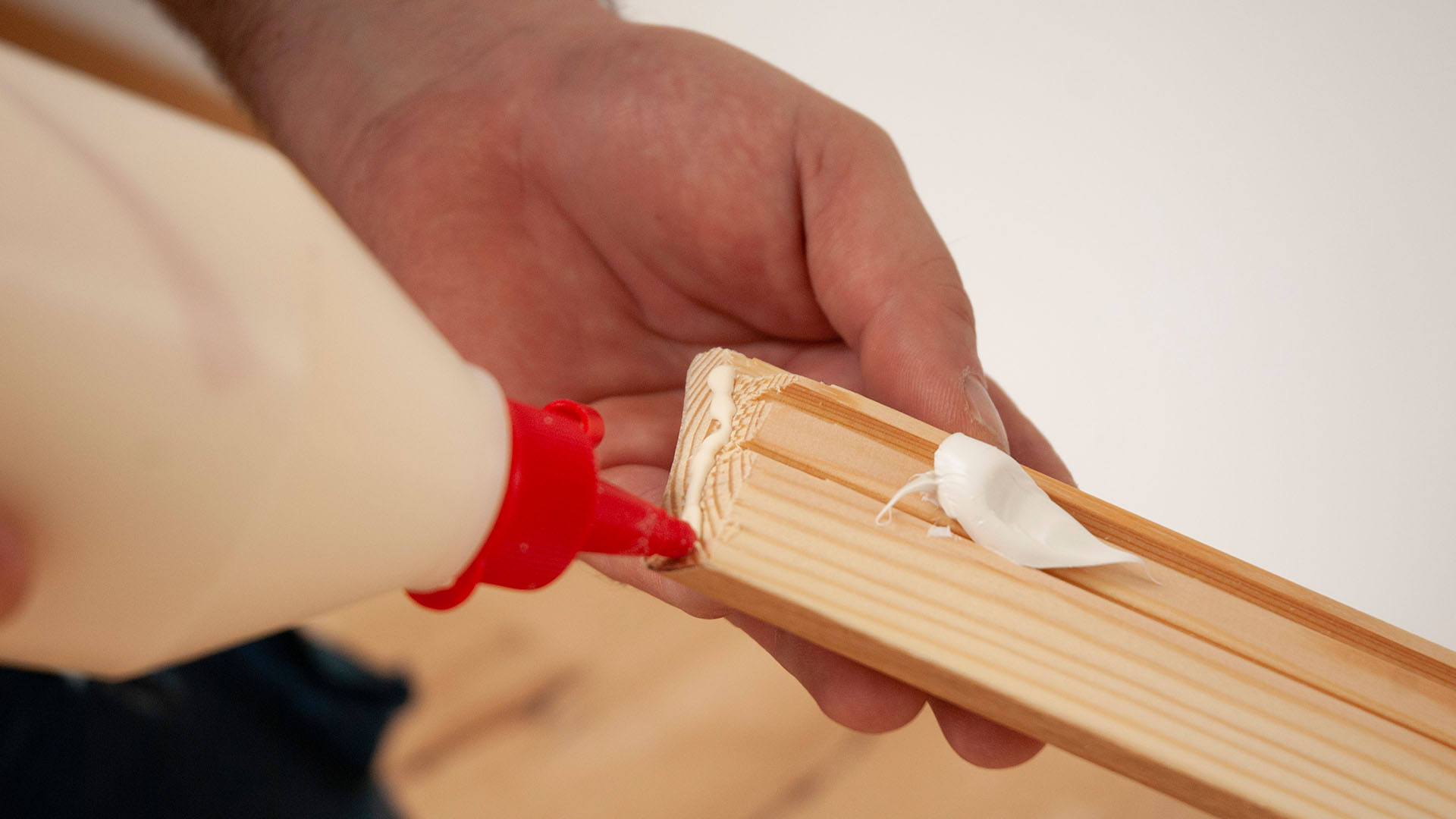
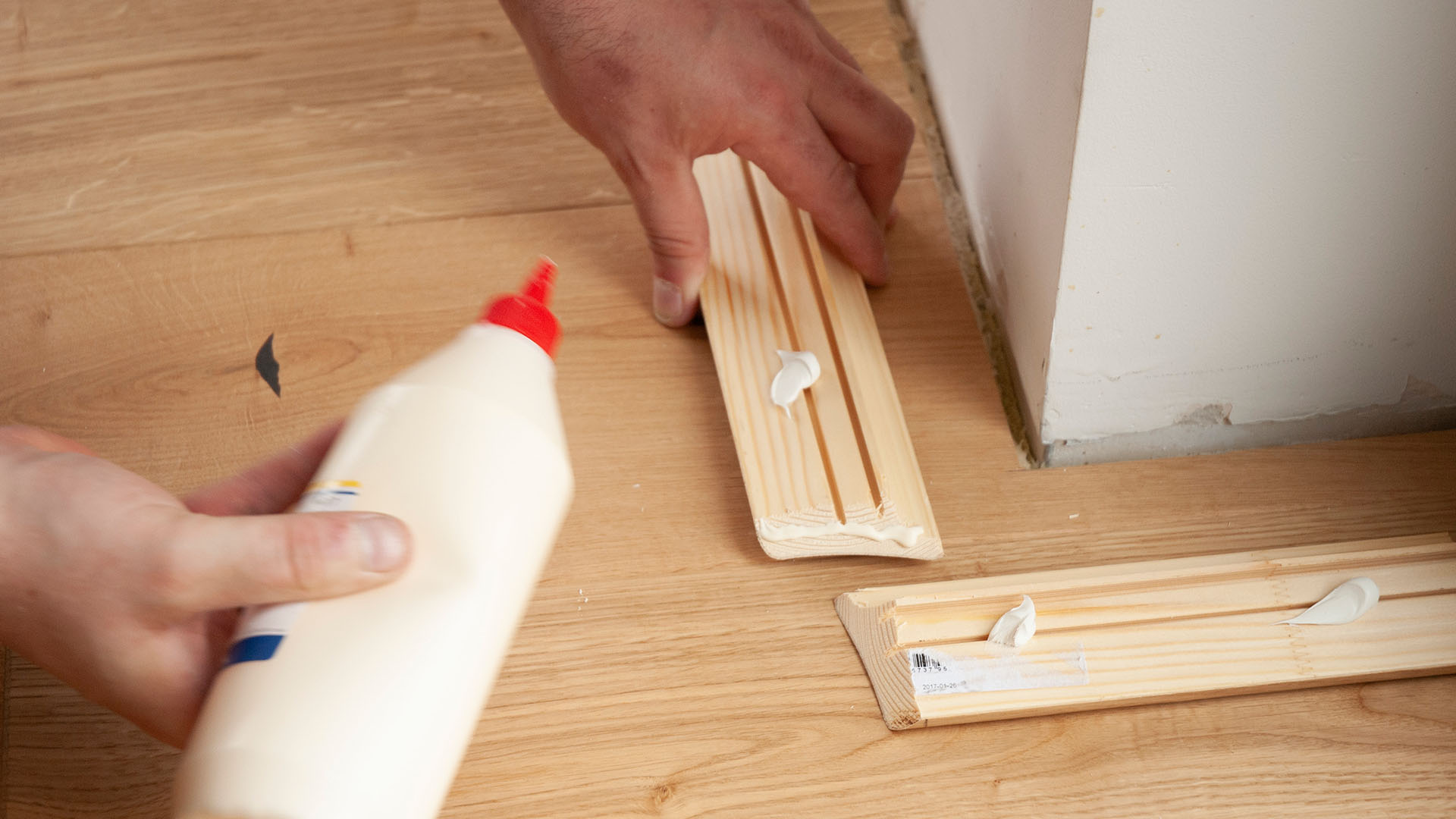
2. Apply the adhesive to the baseboard in strips or in dots, approximately every 10-15 cm. It’s best to use solvent-free adhesives based on polymers. Hot glue can also be used effectively. This additional fastening will help better adjust the baseboards to the unevenness of the walls.
3. Baseboards can be joined directly, but the best results are achieved when the joints are made at a 22.5° or 45° angle. IMPORTANT: To make the joint as inconspicuous as possible, the cut should be made facing away from the entrance to the room.
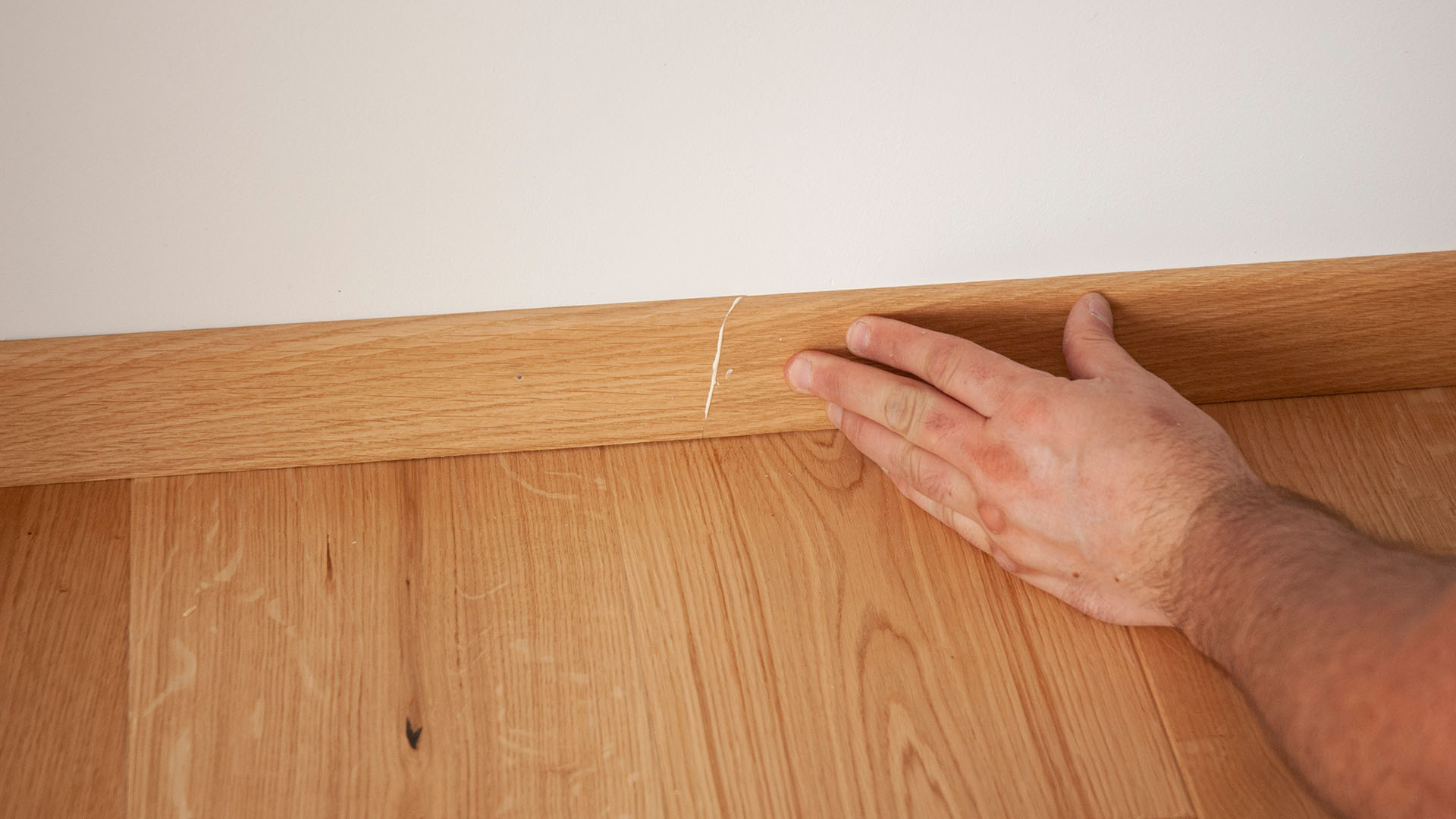
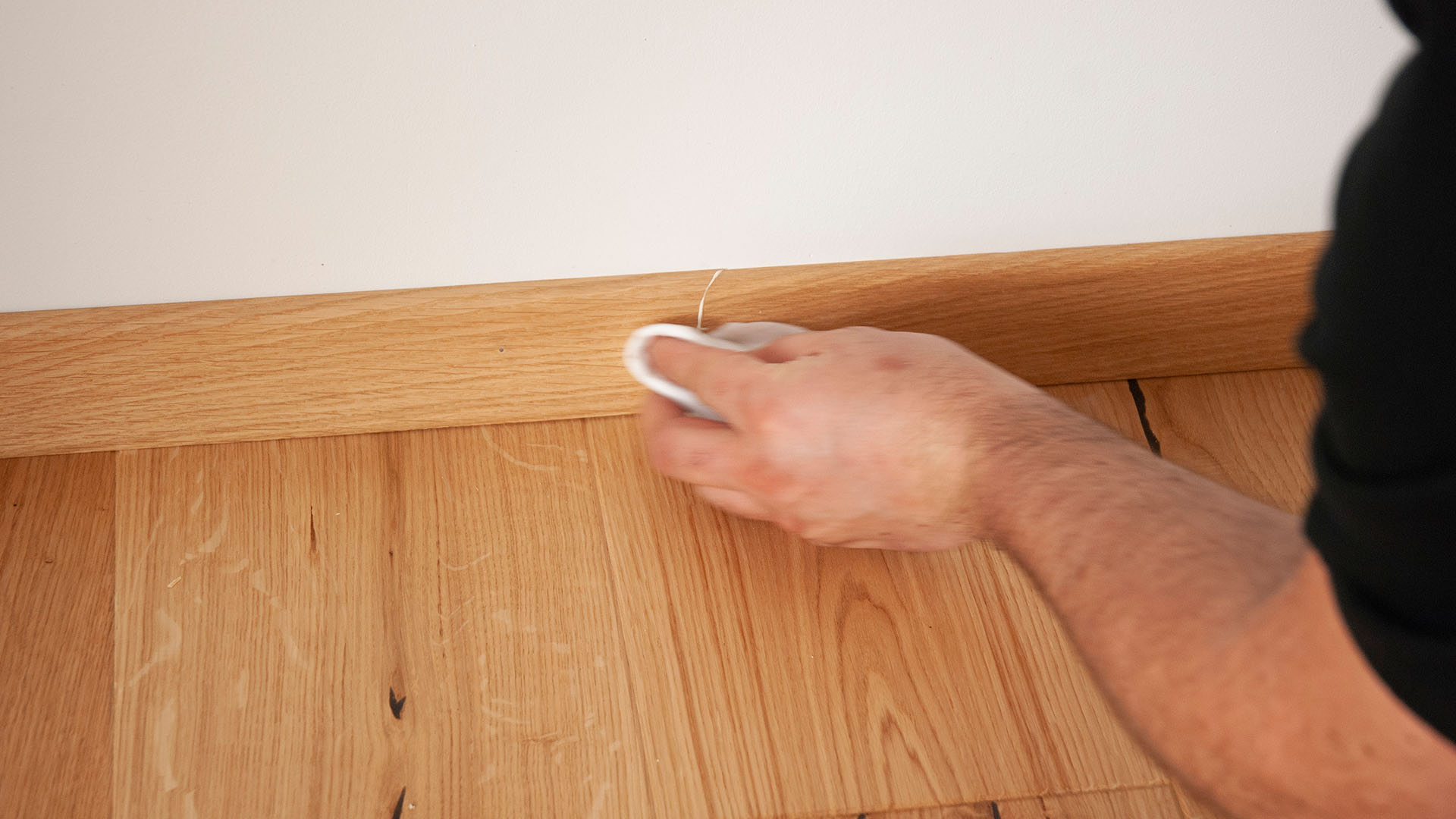
4. Apply wood glue to the joints of the baseboards. After pressing them together, remove any excess glue with a cloth.
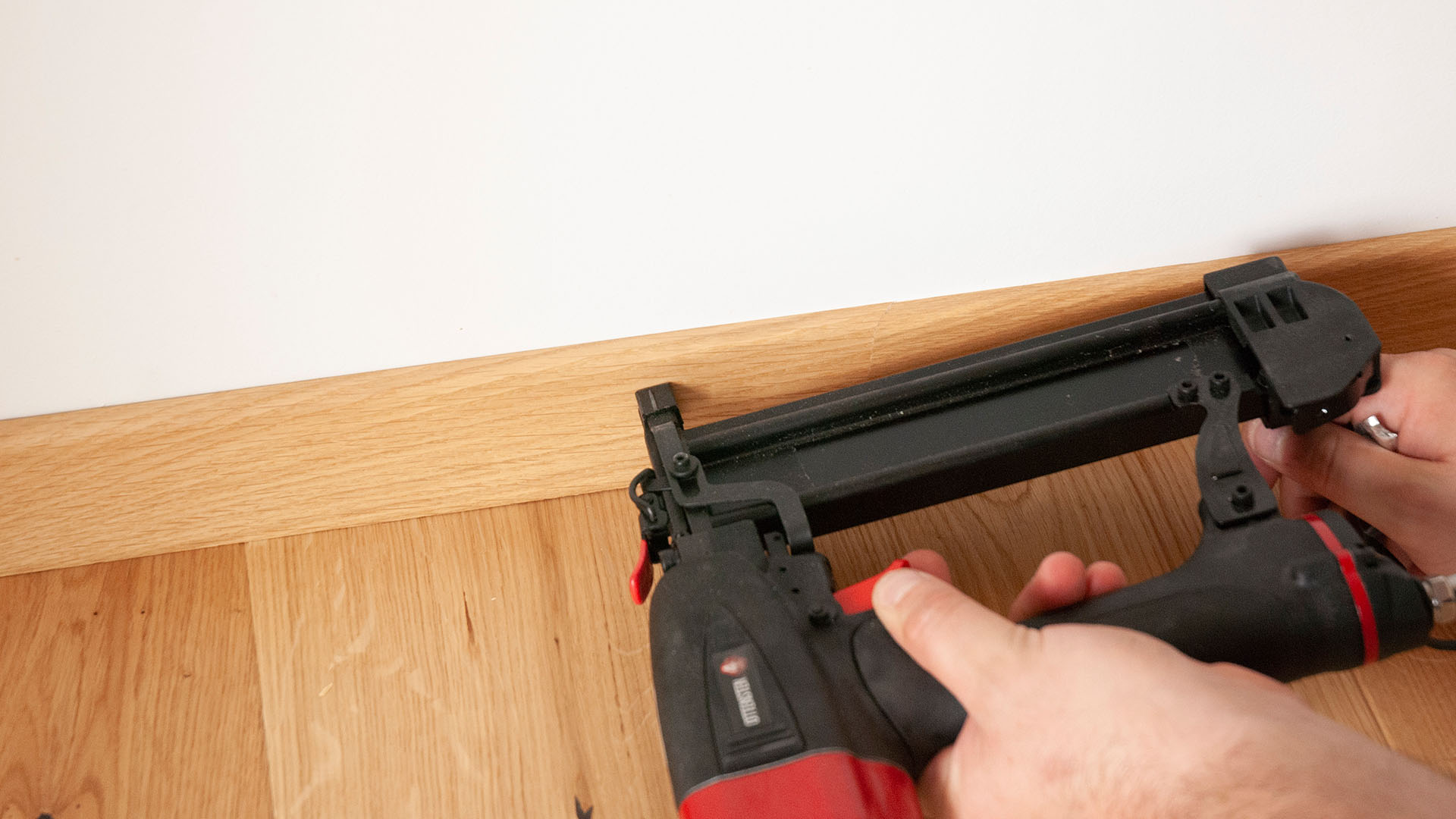
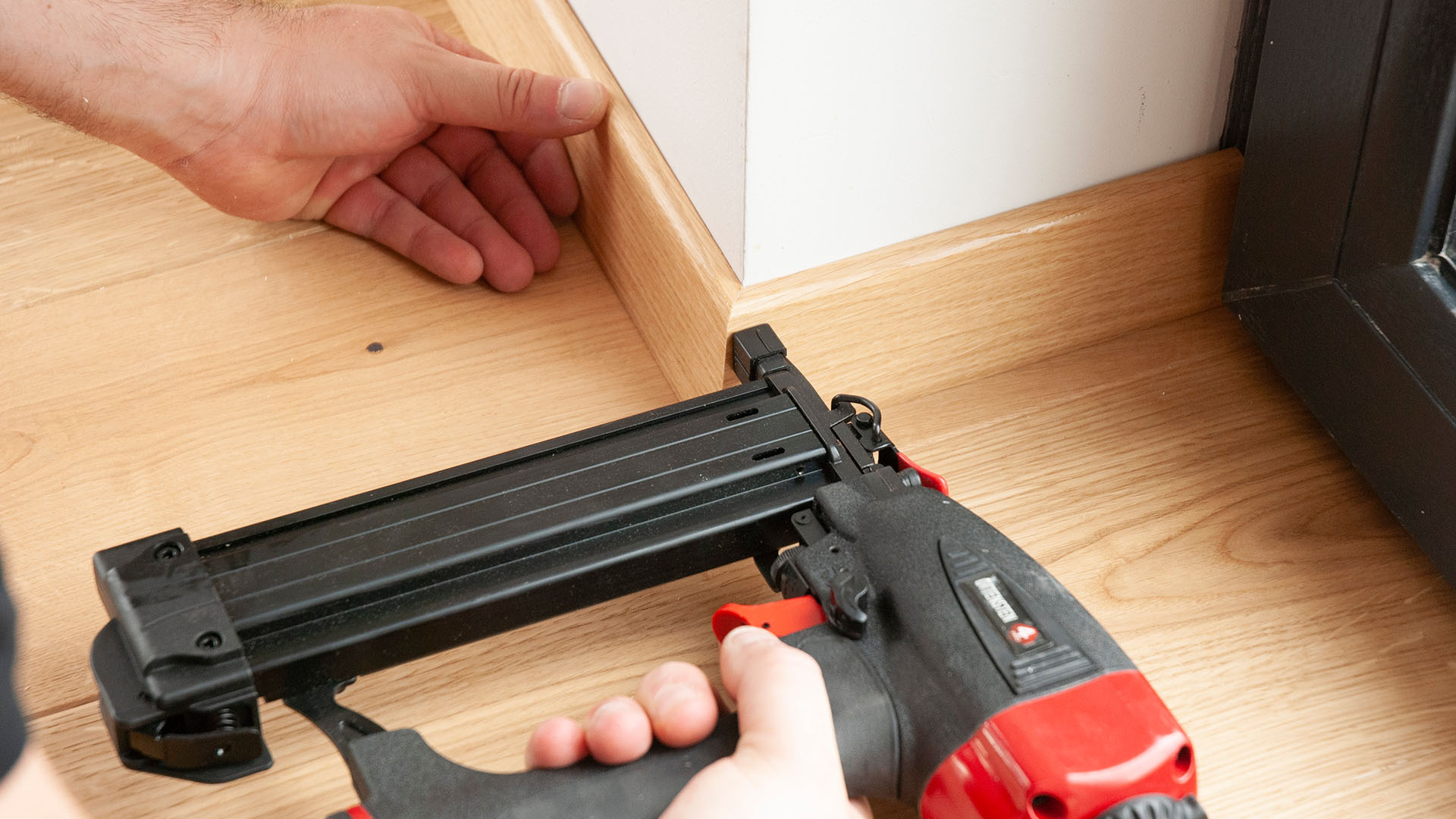
5. In addition to adhesive, we can also use pneumatic nails or finish nails to secure the baseboards, which can be hammered in with a mallet. The optimal length of the nails is 25-35 mm, depending on the type of plaster and the materials the walls are made of.
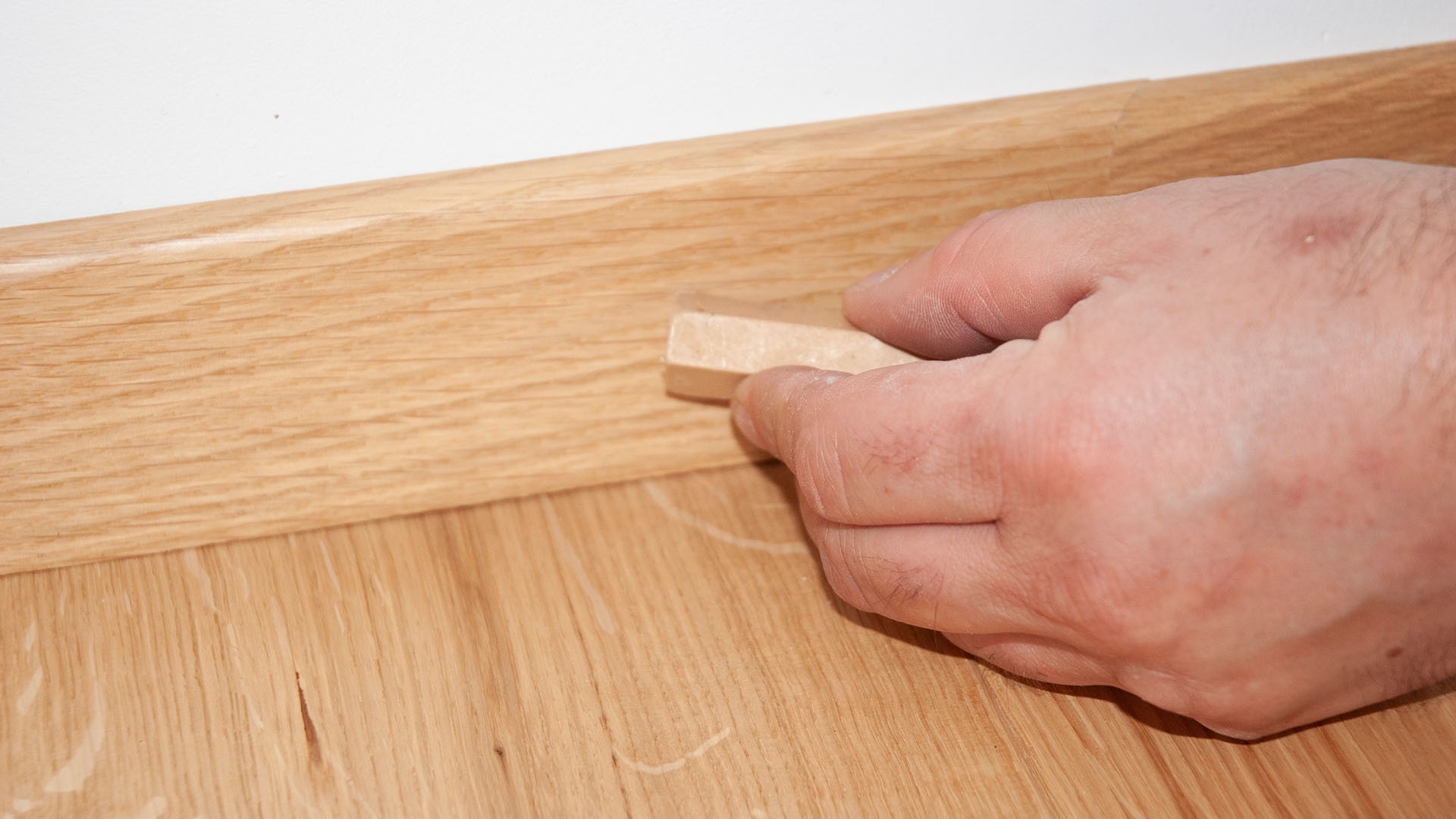
6. The spots left by the nails (or pins) can be easily concealed with wax in a matching color or with parquet filler.
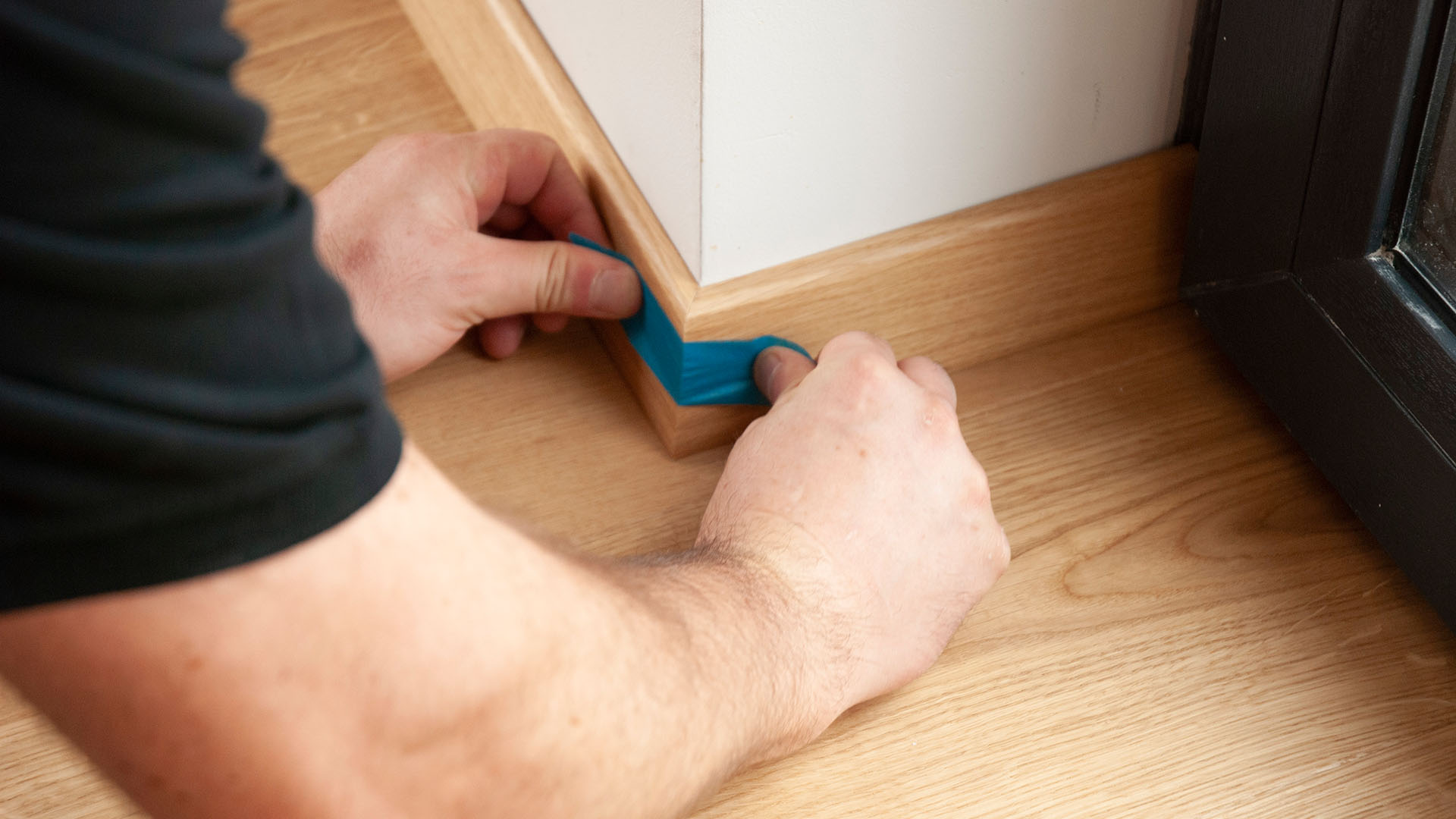
7. For the joints of the baseboards at internal and external corners, apply wood glue as well. External corners can also be reinforced with pins. To prevent the baseboards from shifting during installation, you can additionally secure the corners with tape, which should be removed once the installation is complete.
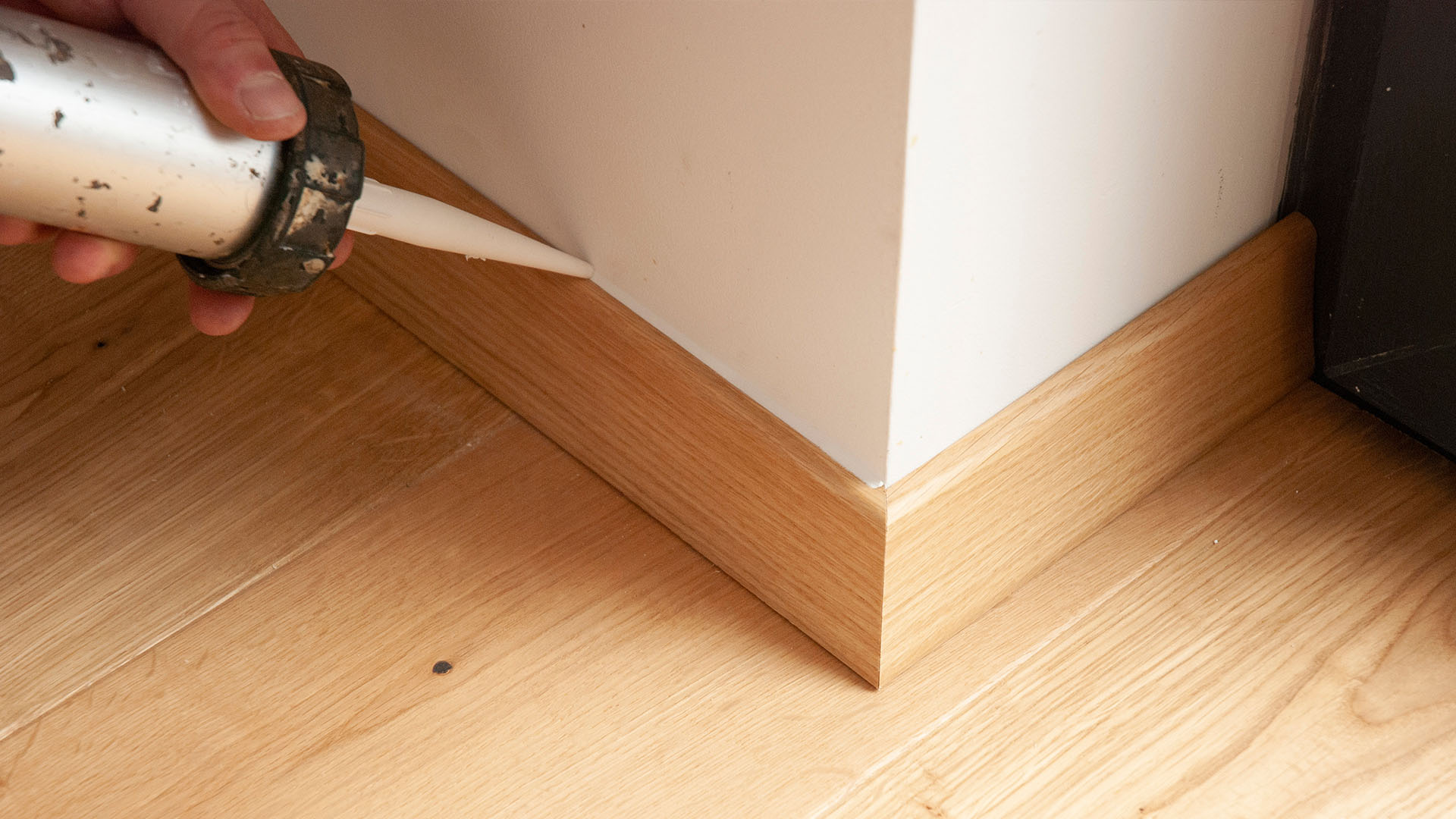
8. The gaps between the baseboard and the wall can be concealed with acrylic caulk. For dark walls, you can paint the caulk with the same color as the wall to make it less visible. Any gaps between the baseboard and the wooden floor can be filled with parquet filler in the appropriate color.
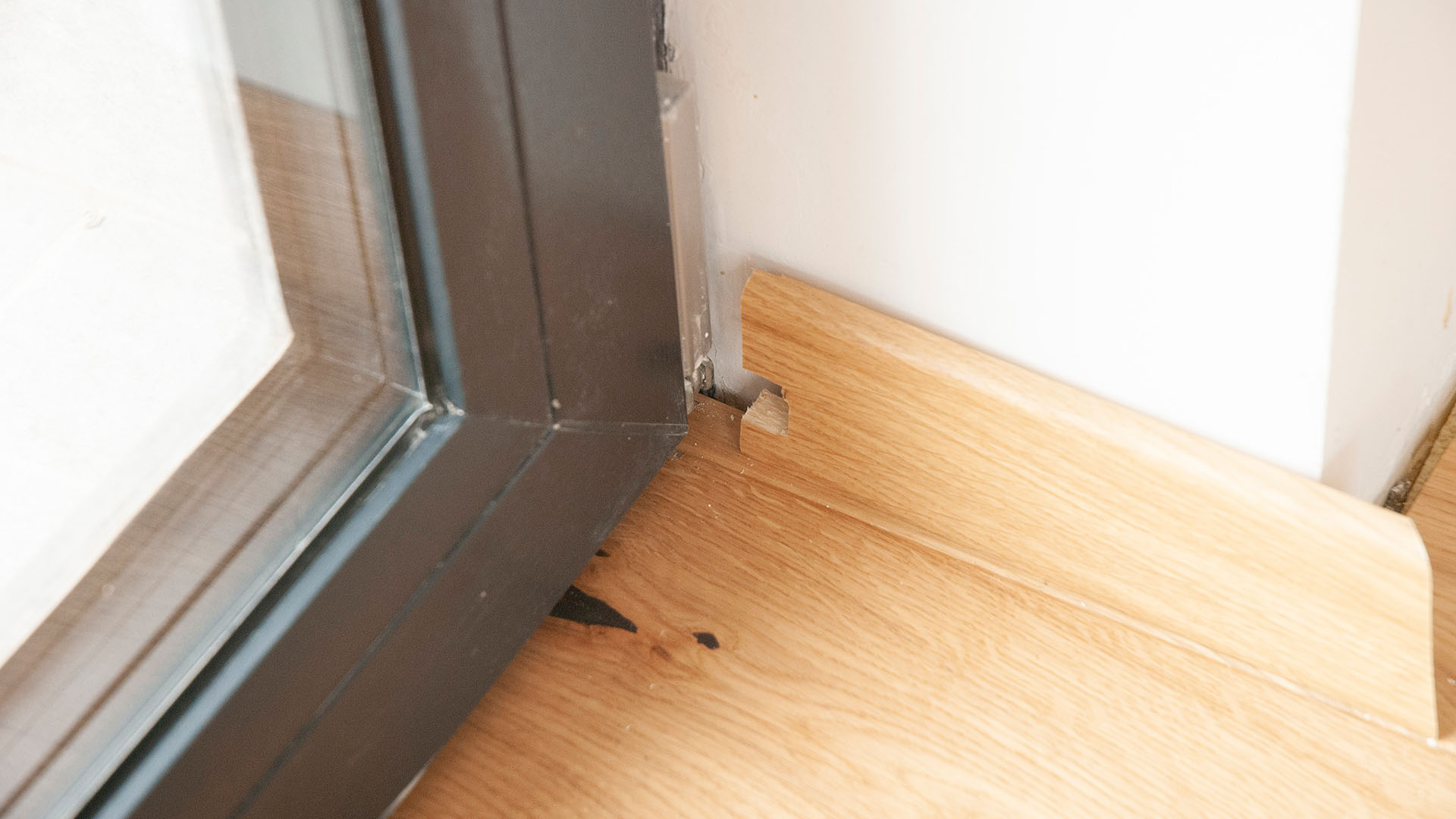
9. Before installing the baseboard near patio or balcony doors, on the hinge side, check if the thickness of the baseboard will obstruct the door from opening. If it does, you can install a suitably narrowed baseboard in that area or use quarter-round molding instead.
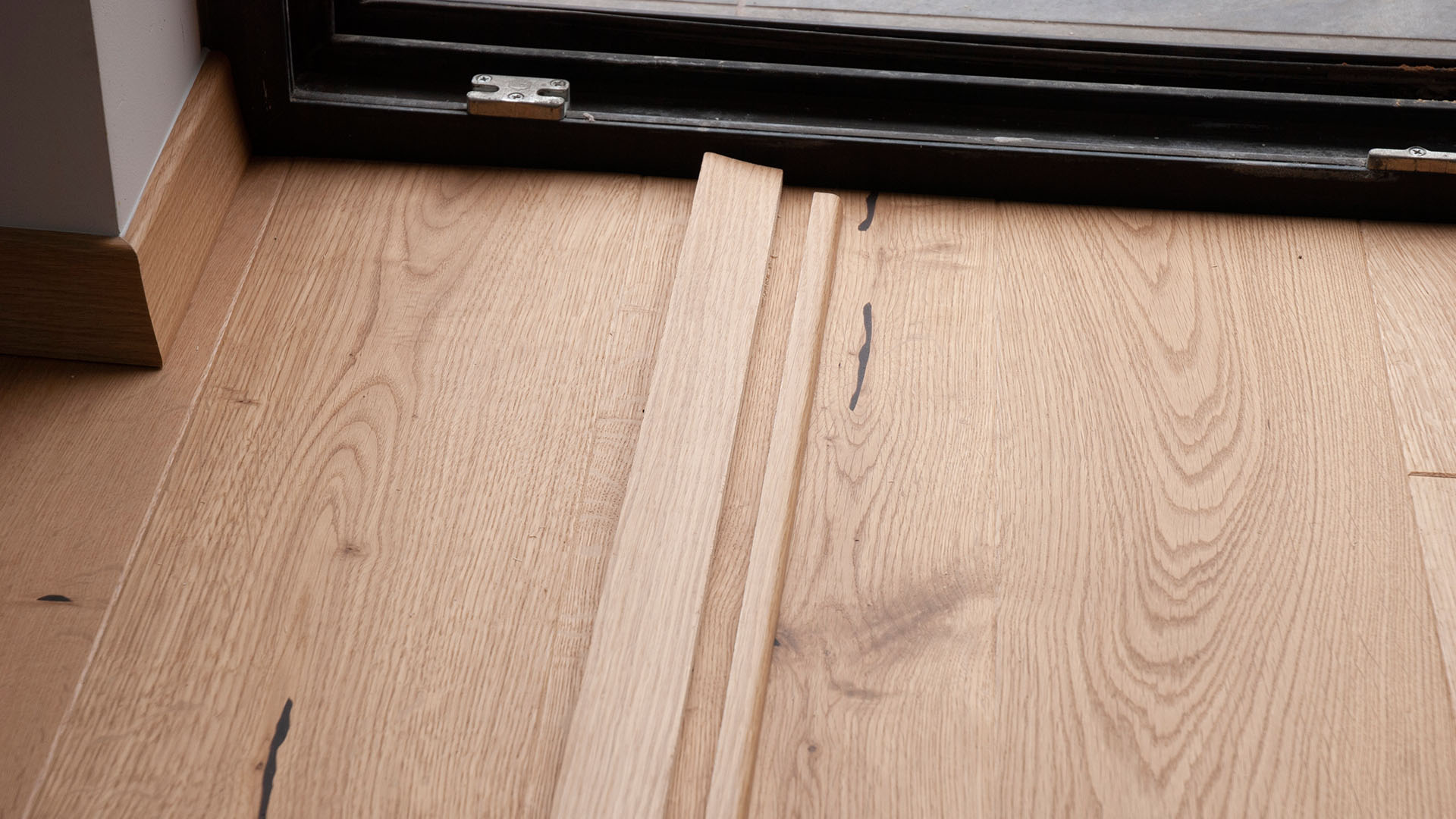
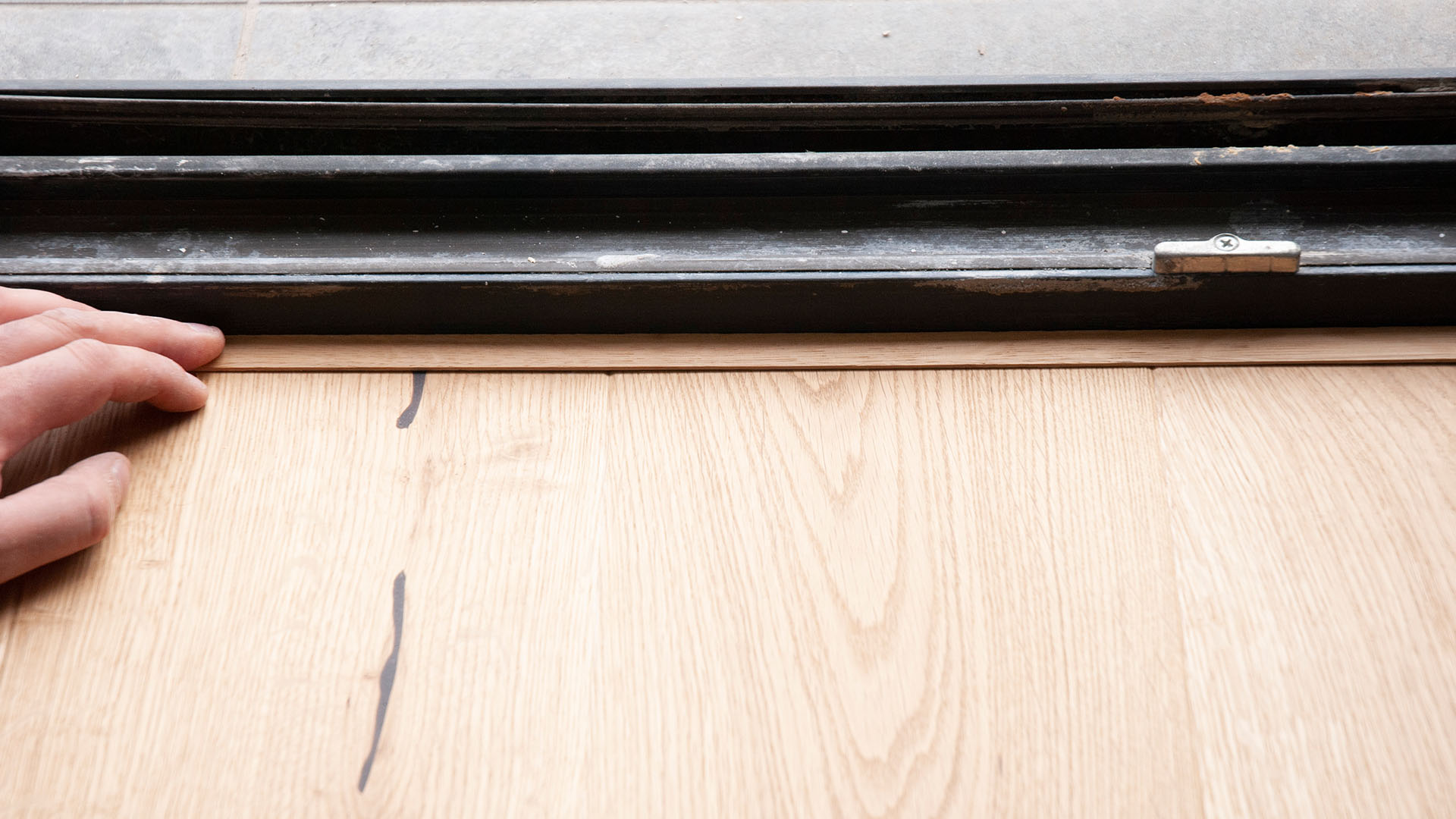
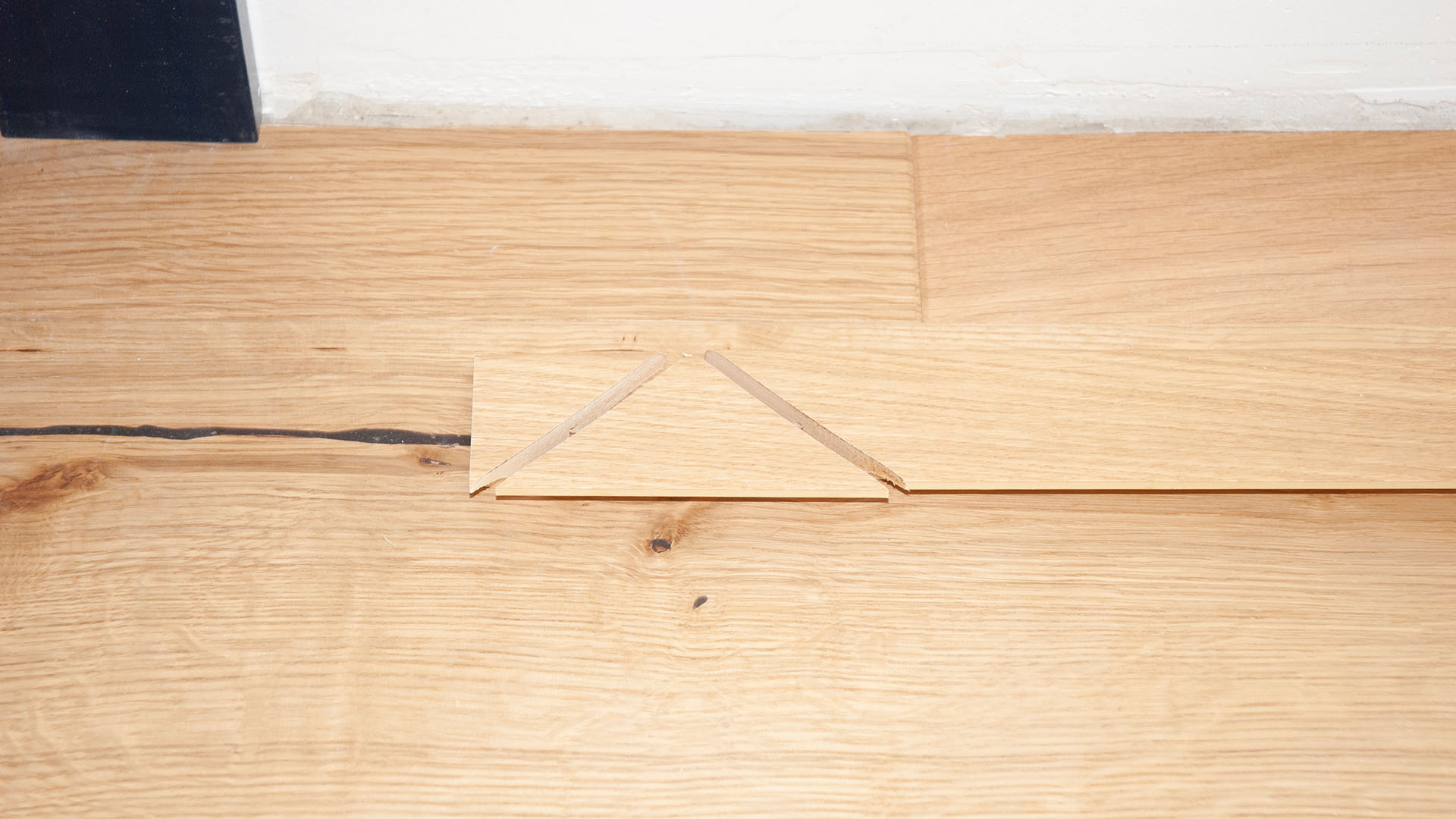
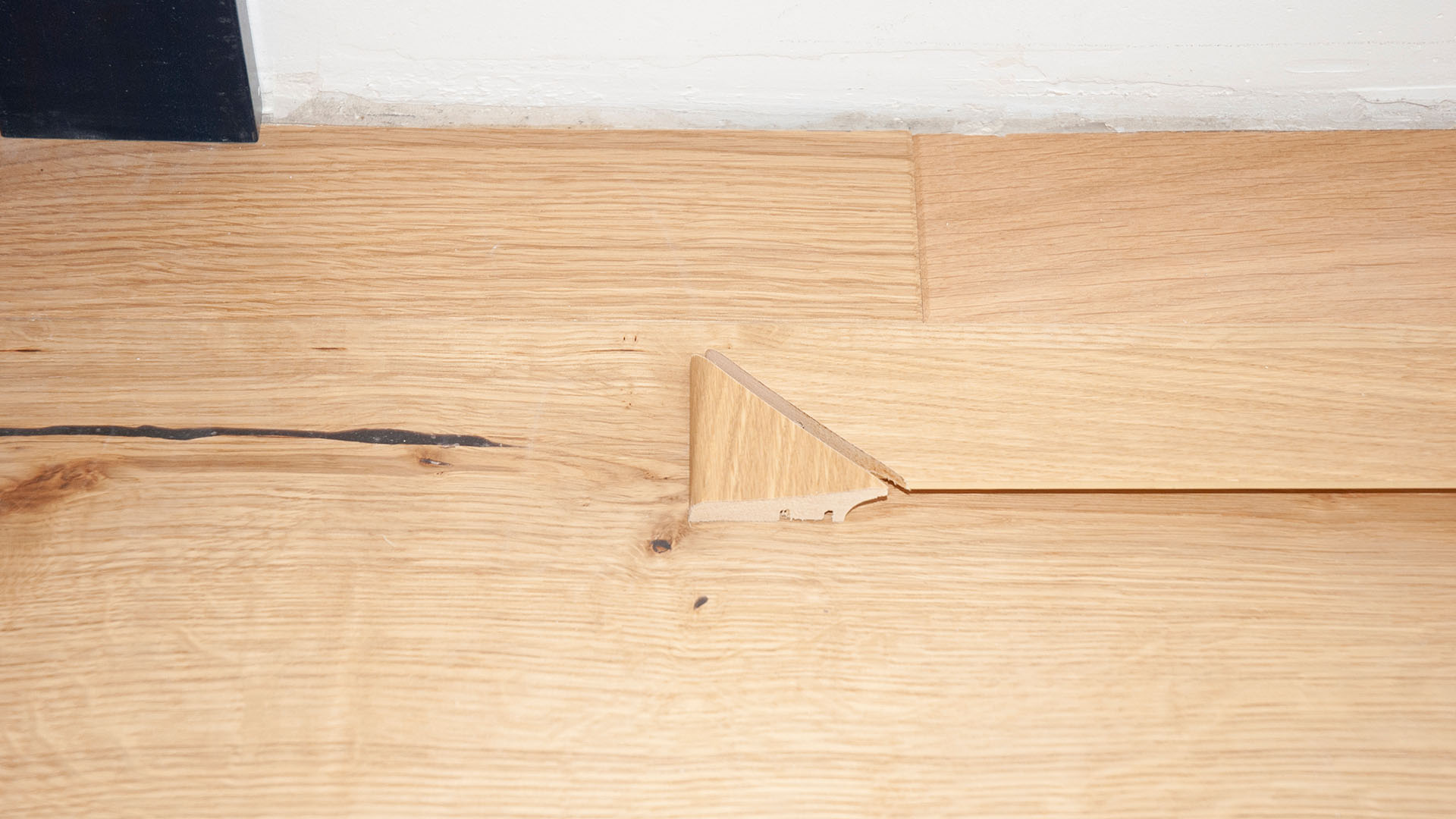
10. The expansion gaps around window profiles can be concealed by cutting quarter-rounds from the baseboard or using a slat cut from a plank. The width of the masking element must be at least 10 mm wider than the width of the expansion gap.
Skirting boards – Installation with Clips
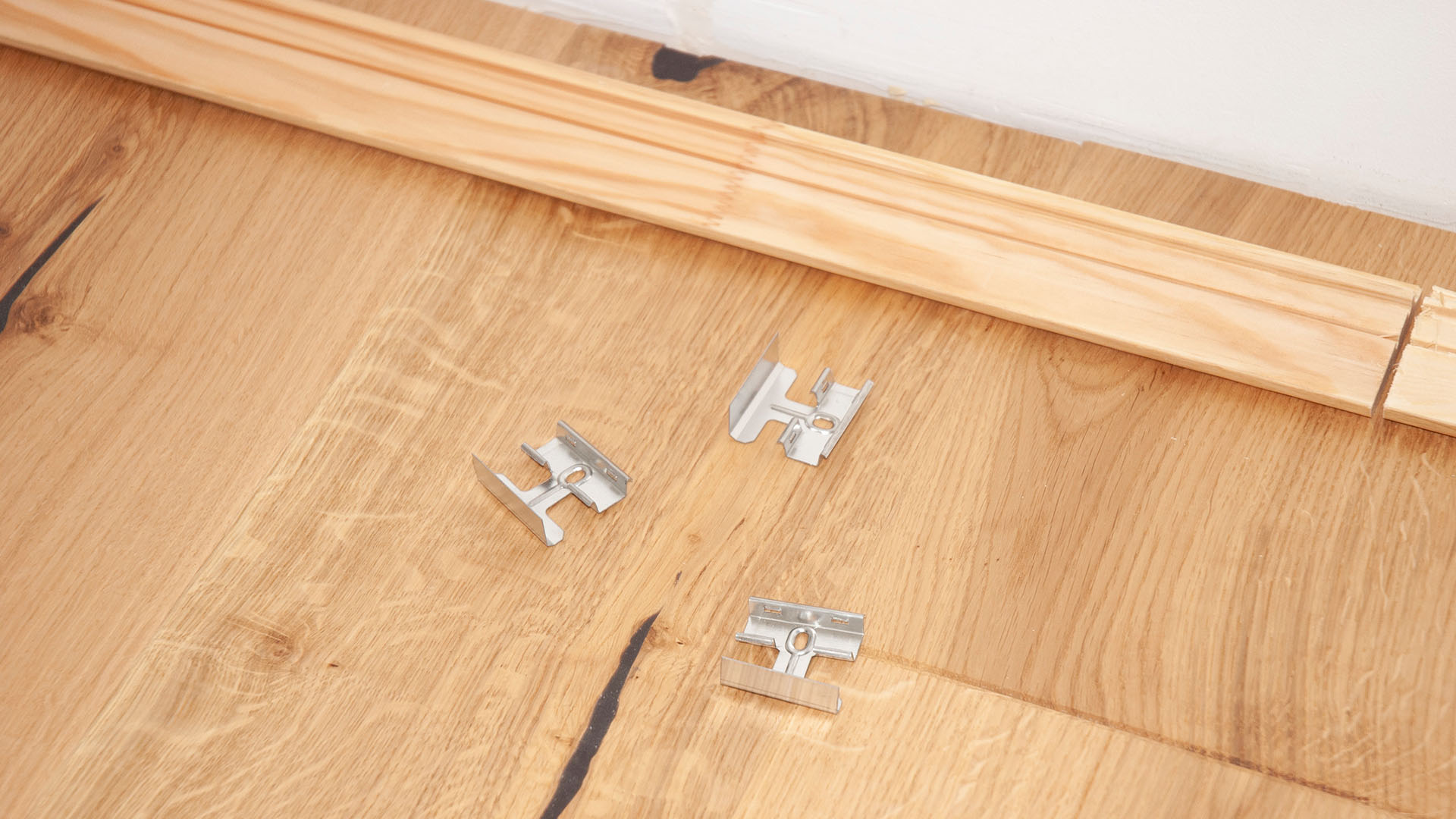
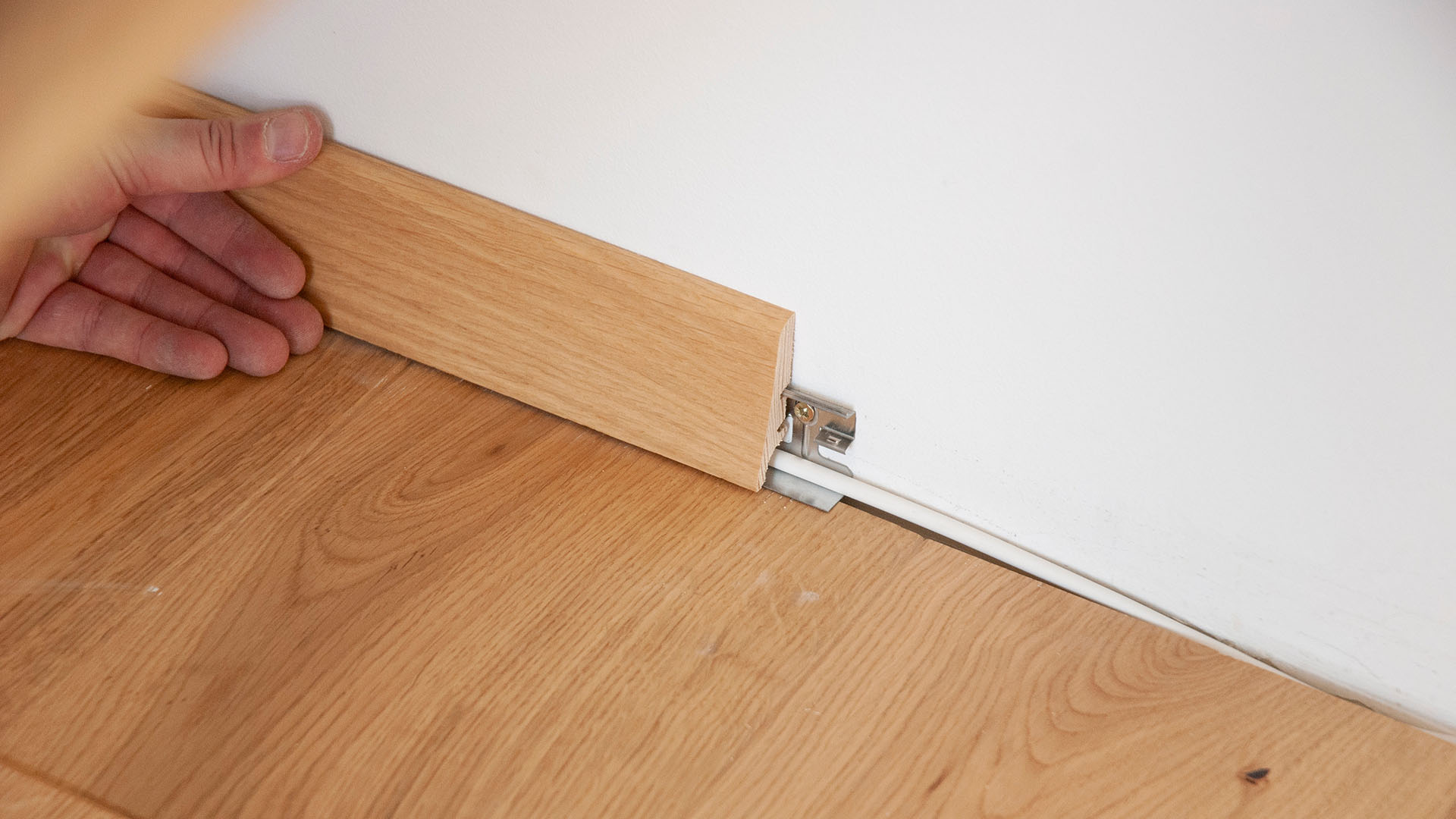
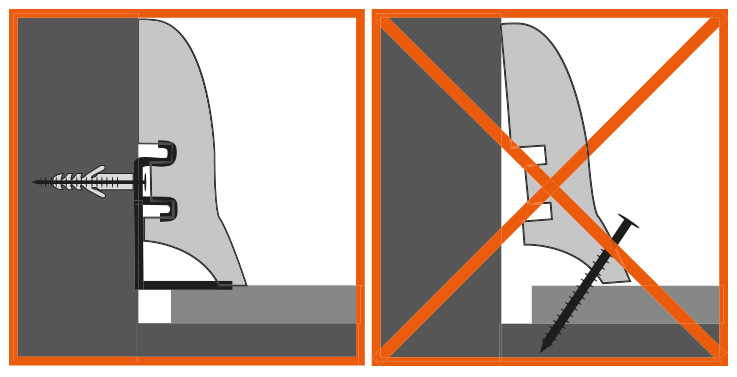
1. Baseboards can also be installed using special clips from Barlinek’s product range. This method allows for easier removal of the baseboards if needed, for example, when replacing cables hidden in the grooves of the baseboard.
2. The clip packaging also includes mounting dowels and screws. For drywall (plasterboard) walls, you will need to replace them with screws and dowels that are appropriate for this type of material.
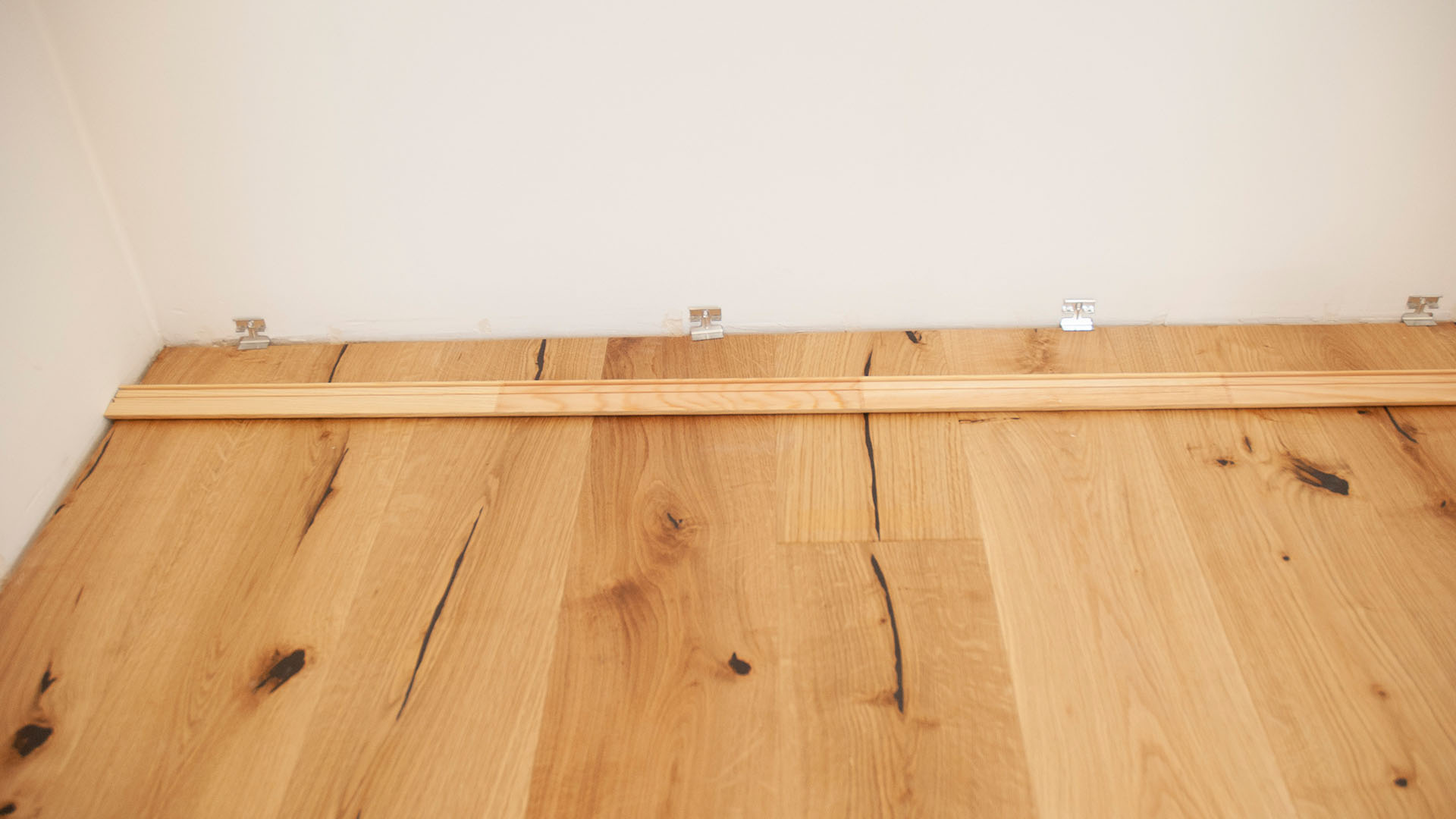
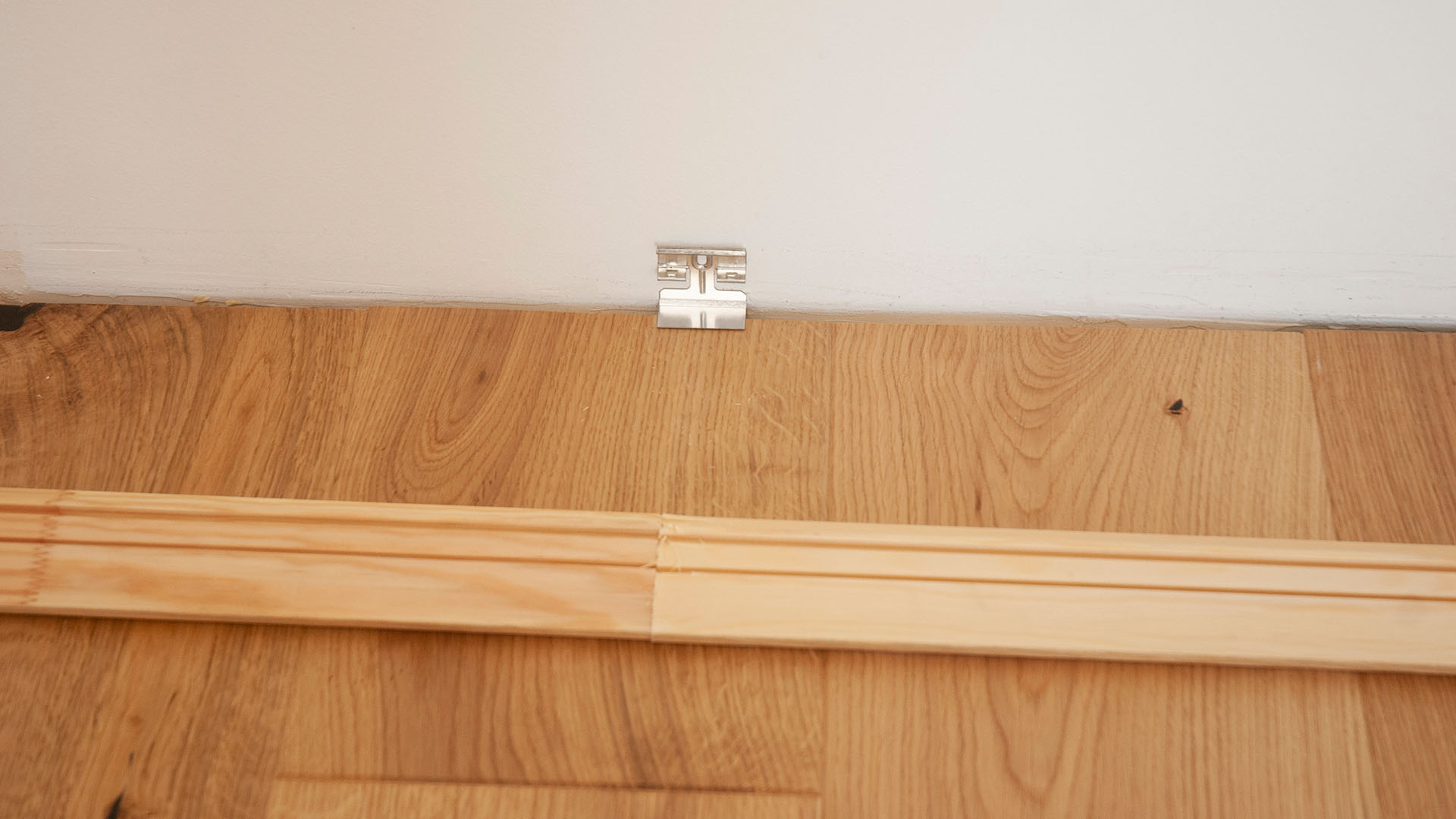
3. The installation of baseboards with clips begins by cutting the baseboards to the correct length—this will help determine the proper placement of the clips. The optimal spacing between clips is 25-50 cm; the greater the wall unevenness, the more clips should be used. IMPORTANT: The clip must be installed at the joint between the baseboard sections.
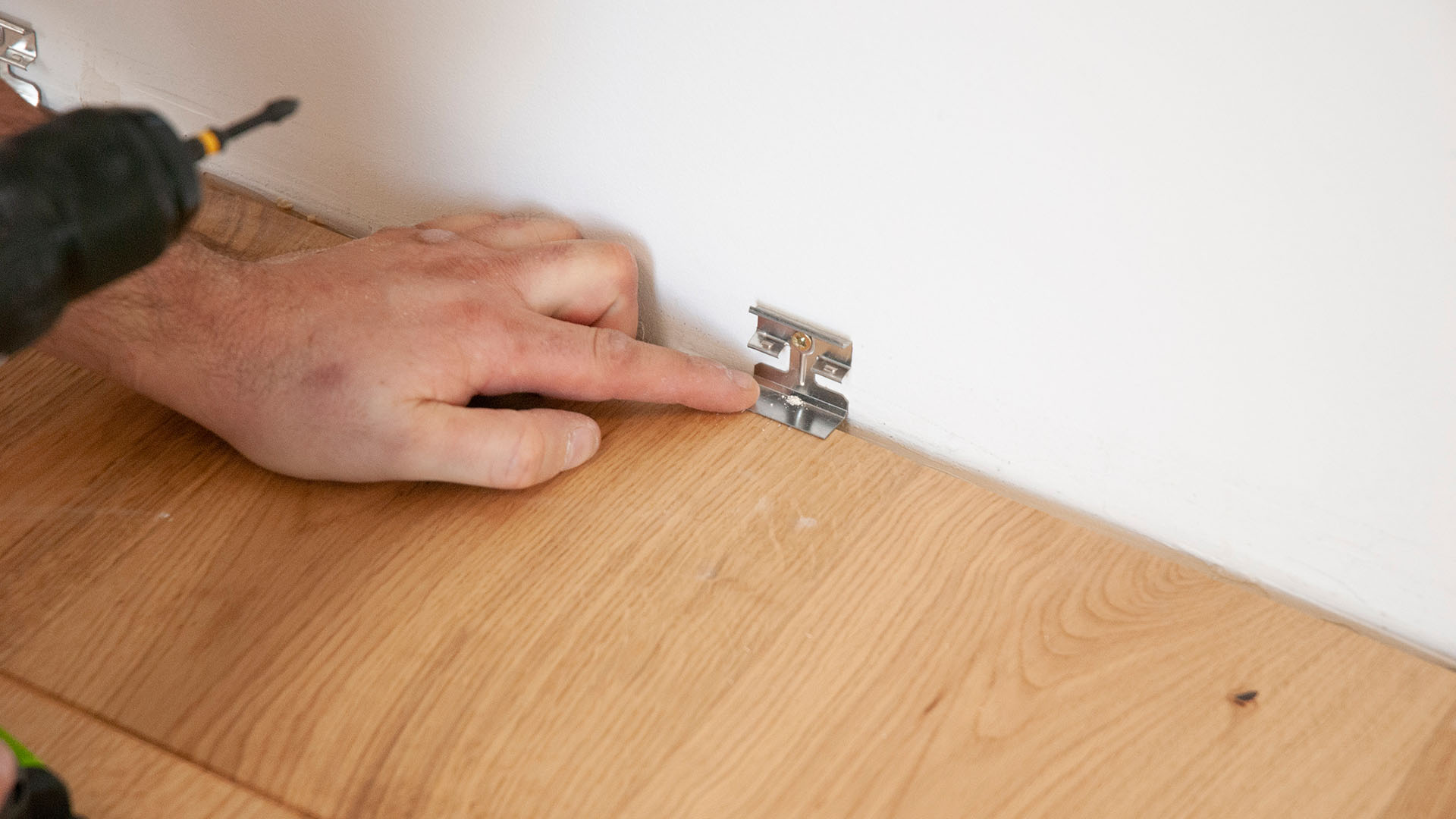
4. After determining the placement, drill a 6 mm hole in the wall and screw in the clips.
5. The clips also allow us to hide additional wires behind the baseboard, such as coaxial cables or speaker wires.
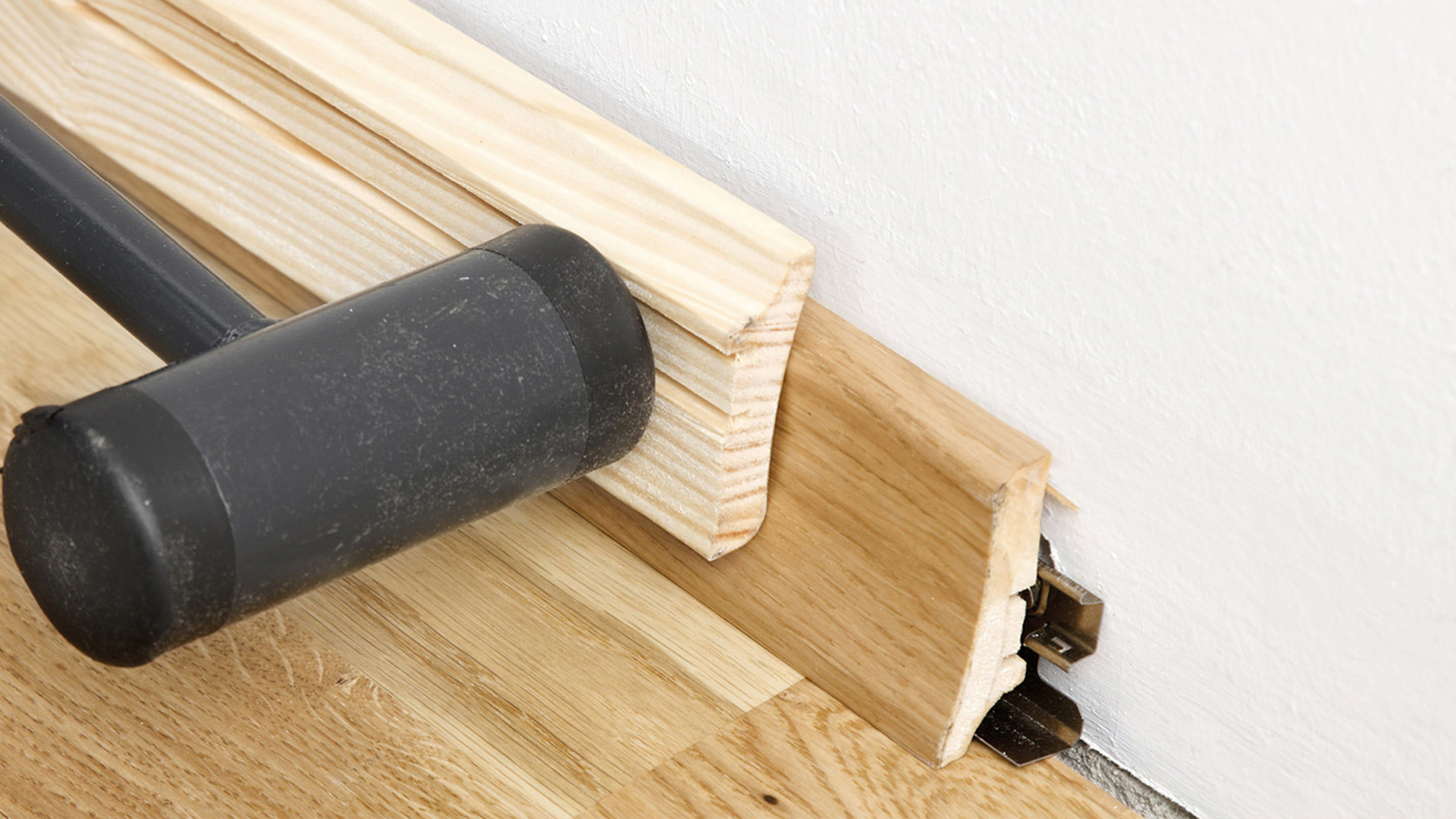
6. Once all the clips are installed, snap the baseboards into place. You can gently tap them with a rubber mallet or use another baseboard to push them in securely.
7. At the door frames, we can cut the baseboards to create neat, aesthetic finishes. This ensures a clean and professional look around the door area.
NOTE! Always make sure to mount the baseboards to the wall – never to the floor!
Skirting Boards Installation – Video Tutorial
If you cannot see the video, please open it on YouTube.